When sourcing packaging supplies, many buyers mix up shrink film and stretch film. Both are transparent plastic packaging films. But they work in totally different ways and serve separate packaging goals.
This packaging film comparison breaks down shrink wrap vs stretch wrap. We cover working principle, materials, advantages, limitations and typical scenarios. By the end, you will know exactly which film fits your products.
What Is Shrink Film?
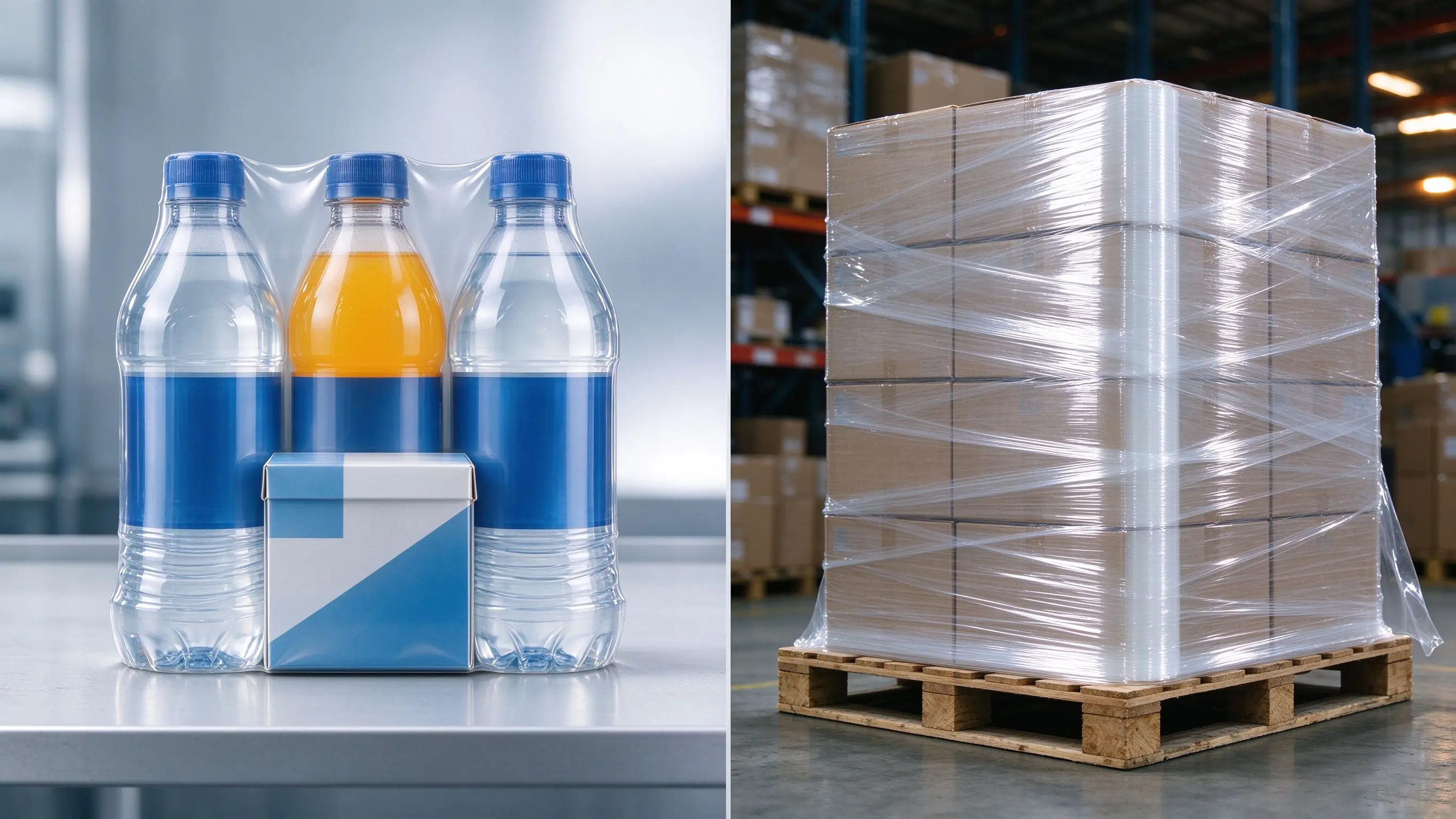
Shrink film (also called shrink wrap) is a thermoplastic film engineered to contract tightly when exposed to heat.
Wrap the film loosely around single items or product bundles first. After sealing, heat from a heat gun or heat tunnel activates the film. The material shrinks and hugs every contour of your goods. It forms a snug, sealed package.
Common materials for shrink film include POF, PE and PVC. It delivers a smooth, crystal-clear retail finish and tamper-evident protection.
Main Applications of Shrink Film
- Retail multi-packs: bottled water, beverage cans, cosmetic sets
- Individual product packaging: books, stationery, perfume boxes, food trays
- Tamper-proof packaging for cosmetics, pharmaceuticals
- Small promotional bundles and gift sets
Pros & Cons of Shrink Film
✅ Pros
- High clarity for attractive shelf display
- Fully conforms to irregular shapes
- Good tamper evidence and dust/moisture barrier
- Sealed package for product protection
❌ Cons
- Requires heat equipment: shrink machine, heat gun or heat tunnel
- Extra energy cost for heating process
- Not ideal for large pallet load stabilization
What Is Stretch Film?
Stretch film (stretch wrap) is made mainly from LLDPE. It depends on mechanical stretching instead of heat.
Pull and wrap the film around cartons or pallets. The film stretches. Its elastic recovery creates constant tension to hold stacked boxes together. No heat source is needed during wrapping.
Stretch film focuses on load containment. It keeps palletized goods from shifting, falling or getting dusty during transit and warehousing.
Main Applications of Stretch Film
- Pallet wrapping for shipping and warehouse storage
- Stabilizing stacked cartons and bulk cargo
- Bundling construction materials, pipes and lumber
- Securing mixed loads for logistics and distribution
Pros & Cons of Stretch Film
✅ Pros
- No heat required; simple operation
- Strong load holding power for pallet transport
- Lower equipment investment (hand dispensers or stretch wrappers)
- Cost-effective for high-volume pallet packaging
❌ Cons
- Not designed for retail display finish
- Cannot form a fully sealed package
- Less tamper-evident than shrink film
Side-by-Side Comparison
表格
| Item | Shrink Film | Stretch Film |
|---|---|---|
| Working Mechanism | Heat activated, film contracts | Mechanical stretch, elastic tension |
| Raw Material | POF, PE, PVC | LLDPE |
| Equipment | Heat gun / shrink tunnel / handheld heat sealer | Hand dispenser / pallet stretch wrapper |
| Core Purpose | Retail packaging, product bundling, tamper protection | Pallet load stabilization, unitizing cargo |
| Visual Effect | Clear, tight, retail-ready look | Functional wrap, less decorative |
| Seal | Forms sealed barrier | No sealed enclosure |
| Best For | Individual goods & small bundles | Full pallet loads for transport |
Beyond Shrink Film — The Versatility of BOPP Films
Shrink film works great for retail bundling. Many businesses also rely on BOPP (Biaxially Oriented Polypropylene) films for daily packaging.
Unlike shrink film, BOPP film does not shrink when heated. It is heat-sealable or coated with adhesives for laminating and wrapping.
At our factory, we supply a wide range of BOPP films tailored to specific industries:
- Food & Produce: Our BOPP Anti-Fog Film is perfect for fresh produce packaging. BOPP Seaweed Packing Film meets specialized food wrapping needs.
- Floral Industry: For flower shops, our Anti-Fog Flower Wrapping Film ensures clear, fog-free presentation.
- Retail & Cosmetics: Elevate your brand with BOPP Pearl Film, BOPP Glossy Film, or BOPP Matte Film for a premium look.
- Industrial & Hardware: Protect tools and parts with our durable BOPP Heat Seal Film for Hardware Parts, Transparent and BOPP Mask Heat Sealing Film.
- Disposable Cutlery: We offer specialized BOPP Heat Sealable Film for Disposable Cutlery.
- Tobacco & Specialty: Our BOPP Tear Tape Cigarette Film provides easy-open functionality.
- Lamination & Bag Making: Use our BOPP Glossy Film for book lamination and bag making. Or choose our ready-made Trapezoidal Bag for quick packaging.
- General Overwrapping: Our BOPP Cellophane Overwrap Film / Pre-Cut Wrap Sheet is ideal for wrapping boxes and gifts. BOPP Heat-Sealable Film offers versatile sealing for various retail goods.
How to Choose Between Shrink Wrap and Stretch Wrap
Use these simple questions to decide which packaging film suits your project.
Pick Shrink Film If:
- You need attractive retail packaging for end customers.
- You wrap single products or small multi-item bundles.
- Tamper evidence or dust/moisture sealing is required.
- Your products go directly on retail shelves.
Pick Stretch Film If:
- You need to secure boxes stacked on pallets for shipping.
- You handle large-volume logistics and warehouse storage.
- You want to skip heat equipment and cut operation energy cost.
- Load stability during truck or container transport is your top priority.
Many Businesses Use Both
It is very common to combine both films. Use shrink film to pack small retail bundles first. Then use stretch film to wrap all those bundles on a pallet for safe overseas shipment. They are complementary packaging solutions, not always direct alternatives.
Essential Equipment for Your Packaging Line
Choosing the right film is only half the battle. You also need reliable equipment to apply it.
For small to medium-scale operations, a handheld heat sealer is a versatile tool. It seals BOPP and cellophane films manually. If you work with ultra-thin films or need precise lamination, our TW-4030 Ultra-thin Film Laminator delivers professional results. It works for book covers, boxes, and specialized packaging.
For traditional shrink film applications, you will need a heat gun or a small shrink tunnel to activate the film’s contraction.
Frequently Asked Questions
Is shrink wrap the same as shrink film?
Yes. Shrink wrap is just another name for shrink film in the packaging industry.
Can stretch film replace shrink film?
No. Stretch film cannot create a sealed, tight conforming layer around individual retail products. It cannot deliver tamper-evident packaging.
Can shrink film wrap pallets?
Technically yes, but it is not economical. Shrink wrapping full pallets needs large heat tunnels and higher energy consumption. Stretch film is the standard pallet wrapping option.
What is the difference between BOPP film and shrink film?
BOPP film does not shrink when heated. It is a heat-sealable or adhesive-coated film used for overwrapping, lamination, and bag making. Shrink film, on the other hand, is designed to contract tightly around a product when heat is applied.
Final Thoughts
The core difference between these two packaging films lies in activation method and packaging goals. Shrink film relies on heat for premium retail packaging and tamper protection. Stretch film uses elastic tension to lock pallet loads stable for logistics. Additionally, BOPP films offer a versatile, non-shrinking alternative for everyday retail and industrial packaging.
When selecting packaging film, start with your end goal: retail presentation, pallet load containment, or general overwrapping. Understanding these differences will help you optimize packaging cost, reduce damage and improve packing efficiency.
If you need custom-sized shrink film, BOPP films, or reliable sealing equipment like our handheld heat sealer or TW-4030 Ultra-thin Film Laminator, contact our team for product samples and quotation.