
Loose BOPP thickness tolerance is one of the most overlooked issues for flexible packaging converters. Budget BOPP rolls may seem attractive, but wide gauge variation, unregulated downgauging and unstable film consistency trigger production disruptions, waste and quality complaints that undermine your operation. Purchasing decisions should focus on process compatibility and consistency, not just raw material quotes.
Why Cheap BOPP Film Can Cost You More
Many converters select low-cost BOPP without verifying real runnability on their lines. When thickness fluctuates beyond agreed limits, downstream converting problems emerge quickly. Consistent BOPP film supports stable web handling, uniform coating and reliable finished packaging. You can explore AHSW’s standard and custom BOPP film grades here: AHSW BOPP Packaging Film
BOPP Thickness Tolerance: Why It Matters
BOPP thickness tolerance refers to the permitted deviation between ordered nominal gauge and measured thickness. Reliable QC checks thickness both across roll width and machine direction, instead of single-point sampling.
For a 20 μm nominal BOPP film:
- Tight tolerance grade: 19–21 μm (±1 μm)
- Loose tolerance budget grade: 17–23 μm (±3 μm)
These ranges are for reference only; final acceptance criteria must be aligned with your converting process and confirmed with your supplier. Thickness variation causes tension fluctuation, wrinkles, uneven adhesive laydown and lamination bonding defects. A nominal micron value on a certificate does not guarantee uniform performance.
Cheap BOPP Film Problems: Hidden Production Risks
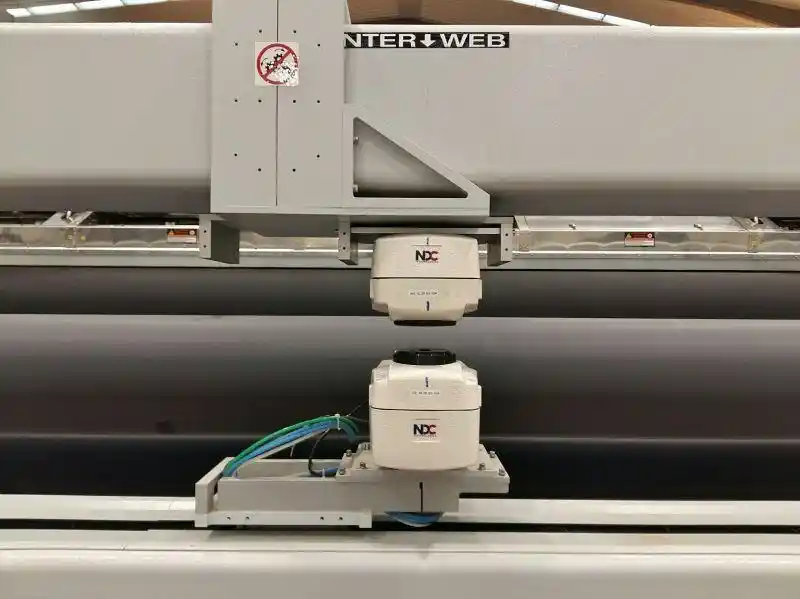
A low-cost BOPP roll may meet nominal thickness on paper but underperform during production. Common issues linked to poor BOPP thickness tolerance include:
- Printing misregistration and graphic defects from unstable flatness and inconsistent surface treatment
- Uneven lamination strength caused by irregular web contact
- Surface scratches and blemishes from inconsistent mechanical properties
- Increased scrap, rework and machine downtime
- Finished packaging defects that lead to customer claims
Thickness deviation alone does not equal failure. Always run production trials under your actual printing, coating or laminating conditions to validate performance. If you want to learn more about our quality control workflow, visit our Packaging Film Quality Control Page
BOPP Downgauging Risks: When Thinner Is Too Thin
Downgauging reduces nominal film thickness to optimise material usage. It works only when mechanical and converting properties stay within specification.
Switching from 20 μm to 18 μm cuts nominal thickness by 10%. Yet thinner film has less resistance to tension spikes, punctures and line abrasion. Real performance depends on resin formulation, orientation, COF, corona treatment, packaging design and end application.
Before approving downgauged BOPP, validate:
- Tensile strength and elongation
- Tear and puncture resistance
- Scratch and abrasion performance
- Coefficient of friction
- Full thickness profile and roll-to-roll consistency
- Printability, sealing and lamination performance
Downgauging is not automatically beneficial. The thinnest spec is rarely the safest for your converting line.
How to Verify BOPP Thickness Tolerance Before Bulk Orders
Lock measurable acceptance criteria with your supplier before mass shipment. Use this practical QC checklist:
- Document nominal thickness, tolerance and test method inside your purchase specification
- Sample thickness across roll width and along machine direction
- Follow recognised test standards: ASTM D8136 for non-contact capacitance gauge thickness testing and ASTM D6988 for property-test sample thickness
- Complete line trials under your regular production setup
- Compare inspection data across multiple rolls and batches
- Agree on corrective actions for out-of-spec shipments
Reference: https://store.astm.org/d8136-17.html
Standards define measurement methods; they do not set universal tolerance limits for every BOPP application. Buyer and supplier must agree on acceptable ranges together.
Before choosing a film based only on nominal thickness, ask a more useful question: What will this film cost after it goes through my production line? A reliable purchasing decision considers both the film specification and the cost of achieving consistent, saleable packaging.