
BOPP laminating film comes in three mainstream types for print finishing: glossy, matte and soft‑touch. This guide compares their gloss, color performance, hand feel, wear resistance and post‑press compatibility. It also shares export compliance rules and thickness selection tips. You can use this info to pick the right BOPP laminating film and avoid common issues like glue failure, bad hot stamping and annoying fingerprint marks.
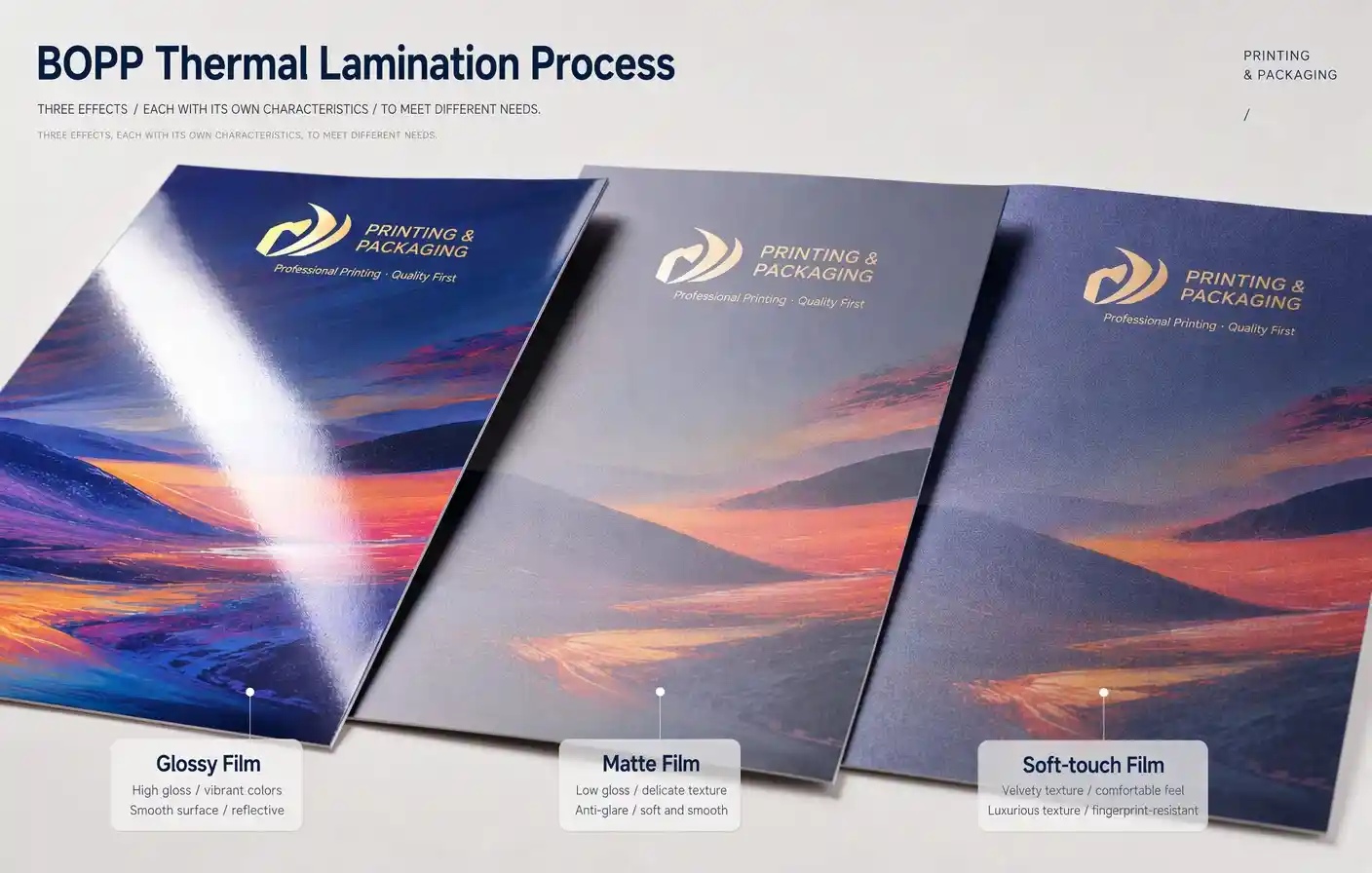
Glossy BOPP Laminating Film
Glossy BOPP laminating film is the most popular high‑gloss thermal lamination material. It creates a mirror surface that lifts color saturation and contrast on printed artwork. Photos and bright graphics look vivid, while black ink gains deeper density.
It resists water and grease well. You can easily wipe stains off its surface. It works smoothly with spot UV, hot foil stamping and die cutting. Most carton and leaflet jobs use 18‑25 μm thickness.
However, strong reflection creates glare under lights. Fingerprints and tiny scratches show clearly on dark prints. Long text on glossy lamination can strain readers’ eyes. It fits FMCG packaging, menus, posters and retail display boxes that need eye‑catching visuals.
Matte BOPP Laminating Film
Matte BOPP laminating film delivers low‑glare, non‑reflective finish. It improves text readability, so many business and mid‑range packaging projects choose it.
Colors turn soft and restrained after lamination. Matte hides fingerprints better than glossy film. It also makes sharp contrast when paired with spot UV.
But matte film scratches easier. Friction will leave shiny burnish marks, and oil stains are hard to clean. Its price sits at a medium level. It suits business cards, brochures, book covers and gift cartons.
You must control lamination pressure carefully. Too much pressure creates unwanted shiny spots and wastes batches. Run machine trials before large orders.
Soft‑Touch BOPP Laminating Film
Soft‑touch BOPP laminating film looks similar to matte film at first sight. But its special coating brings silky, suede‑like hand feel. It builds premium unboxing experience for high‑end packaging.
Its muted ink tone works perfectly with spot UV. This combination creates a far better premium effect than standard glossy or matte film.
This specialty film costs more and scratches easily. Grease marks stick hard and stay visible. One big trap for converters: regular water‑based glue does not stick well. It causes cartons to pop open. Therefore, use PUR glue or dedicated soft‑touch adhesive, and finish peel tests during sampling.
Hot stamping results vary by film grade. Always test before mass runs. You cannot write on soft‑touch lamination, and rework is almost impossible. It matches cosmetic boxes, perfume rigid boxes, luxury invitations and premium catalogs.
Comparison Table
| Item | Glossy BOPP Laminating Film | Matte BOPP Laminating Film | Soft‑Touch BOPP Laminating Film |
|---|---|---|---|
| Gloss Level | High mirror gloss | Low matte gloss | Ultra‑low matte |
| Hand Feel | Smooth glass surface | Plain smooth finish | Velvet suede touch |
| Fingerprint Visibility | Very obvious | Moderate | Grease marks stand out |
| Scratch Resistance | Good | Fair | Poor, easy to scuff |
| Spot UV Contrast | Normal | Good | Excellent |
| Cost | Low | Medium | High |
Export Compliance & Thickness Selection
When you order BOPP laminating film for overseas shipment, match grades to local laws. For EU food contact packaging, ask your supplier for DoC and migration test reports. Check requirements from EU food contact regulation and FDA standards for US markets.
Choose thickness based on your substrate. 15 μm thin film works for light single sheets. 20‑25 μm is the universal standard. Pick 30 μm+ for heavy rigid boxes.
Post‑press compatibility matters most. Glossy and matte BOPP laminating film perform stably for stamping, UV and gluing. If you use soft‑touch film, confirm glue and stamping results with your converter in advance.
BOPP laminating film is a broad category. It also includes anti‑scuff matte, silk finish and anti‑fog variants. Thermal laminators apply these films to protect ink from water, dust and abrasion. Furthermore, lamination defines your package’s visual style and tactile brand impression. To explore more BOPP options and real use cases, visit BOPP film application guide.
Many buyers only judge film by appearance and ignore post‑press performance. This mistake leads to expensive mass production defects. In short, complete full sampling with lamination, hot stamping and carton gluing before bulk production.