
In bakeries, fresh-food supermarkets and accessory retail counters, you often see a familiar combination. The product is first placed on a tray insert to hold its shape, then packed into a clear bag. The bag mouth is closed by a twist tie or heat seal, sometimes topped with a header card and tag. This “tray plus bag” approach both protects the product and makes it easy to display. The material of that bag decides whether the packaging looks clear and crisp or limp and hazy. It also decides cost and food safety. Choosing the right material for your tray packaging bags is easier than it seems — this guide walks you through it.
For tray packaging, the bag also has four practical jobs. It keeps the tray and product clean and lets customers see the item clearly. It also closes securely so nothing falls out, and carries printed branding or barcodes. Each material balances these jobs differently. The choice should be driven by your product and market — not by habit.
There are five common materials for tray packaging bags, each with its own use.
OPP — The Workhorse of Display Packaging
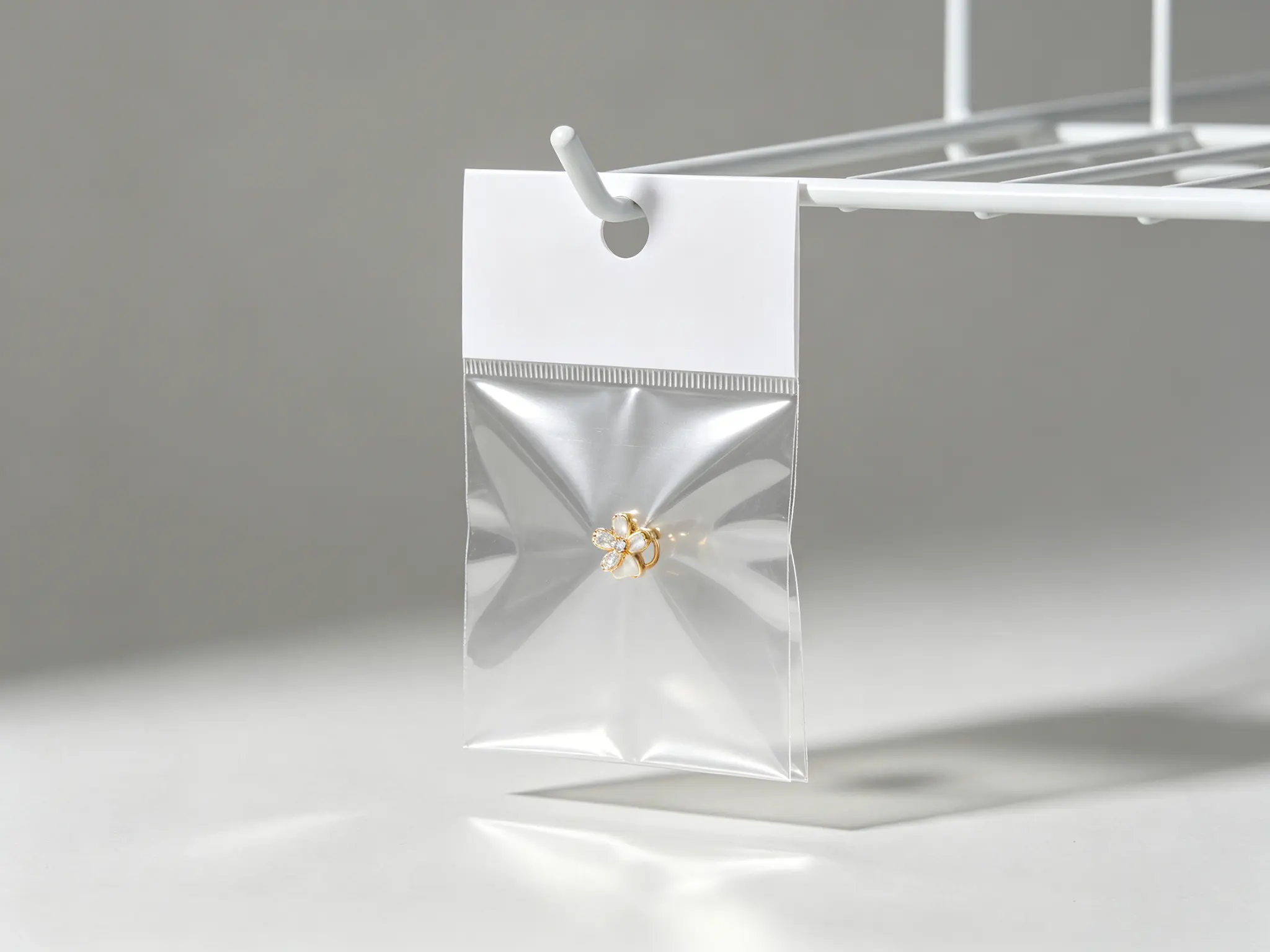
OPP (oriented polypropylene) offers high transparency, a flat and crisp feel, excellent printability, and good resistance to moisture and grease. Header bags are almost always made of OPP. A stiff bag is needed to support the header card and punch hole for the best shelf display. Gifts, accessories and bakery snack packaging all rely on it. Its drawback is brittleness: OPP does not stand up to strong pulling. It is not ideal for heavy items or products with sharp edges. It is also the base for many self-adhesive bags, and its smooth surface takes printing and hot-stamping well.
PE — The Economical All-Rounder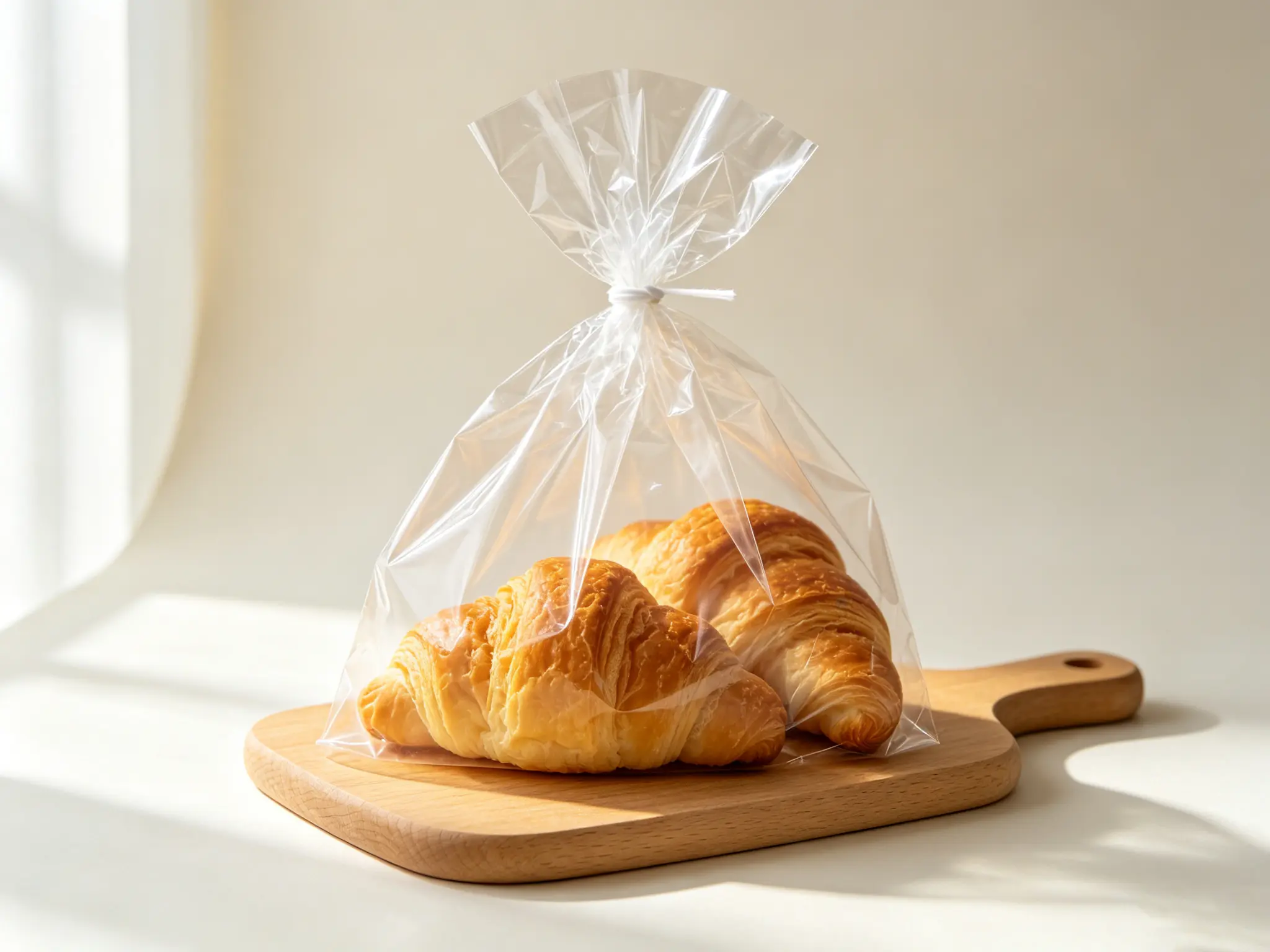
PE (polyethylene) is soft, tough, tear-resistant and cold-resistant, so it does not crack easily even in frozen storage. Food-grade PE can contact food directly, which is why it is the most common material for flat bags. It is cheaper than OPP and offers decent moisture protection, but its clarity is lower — the film looks milky. It is also less crisp than OPP, making it a good fit for high-volume, cost-focused packing. PE bags can be produced in a wide range of thicknesses, from thin garment bags to heavy-duty versions. They also stay flexible at low temperatures.
CPP — The Star of Heat Resistance and Sealing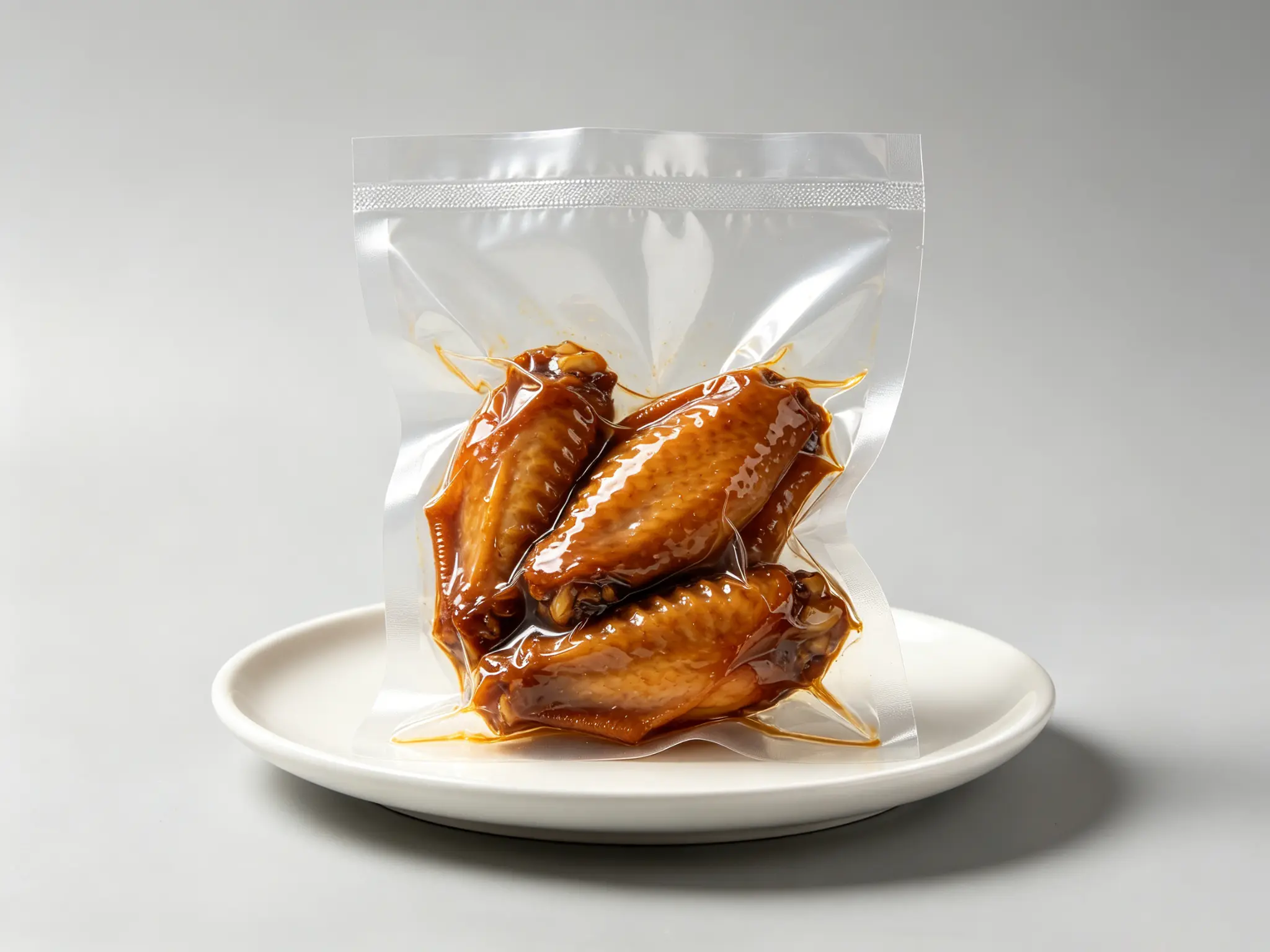
CPP (cast polypropylene) provides high clarity, good stiffness and excellent heat-sealing performance. It can withstand temperatures above 60°C, and heat-resistant grades (RCPP) even support retort cooking. For food tray packaging, CPP is the first choice. It handles hot sealing, oil stains and strong sealing demands well.
PET Film — The Premium Display Option
PET film has high strength and extremely high clarity, with a glass-like feel. It is often used as the outer layer of laminated bags or for premium gift display packaging. It is the most expensive option, best reserved for high-value products where brand image matters.
Shrink Film — Wrapping Tightly Around the Tray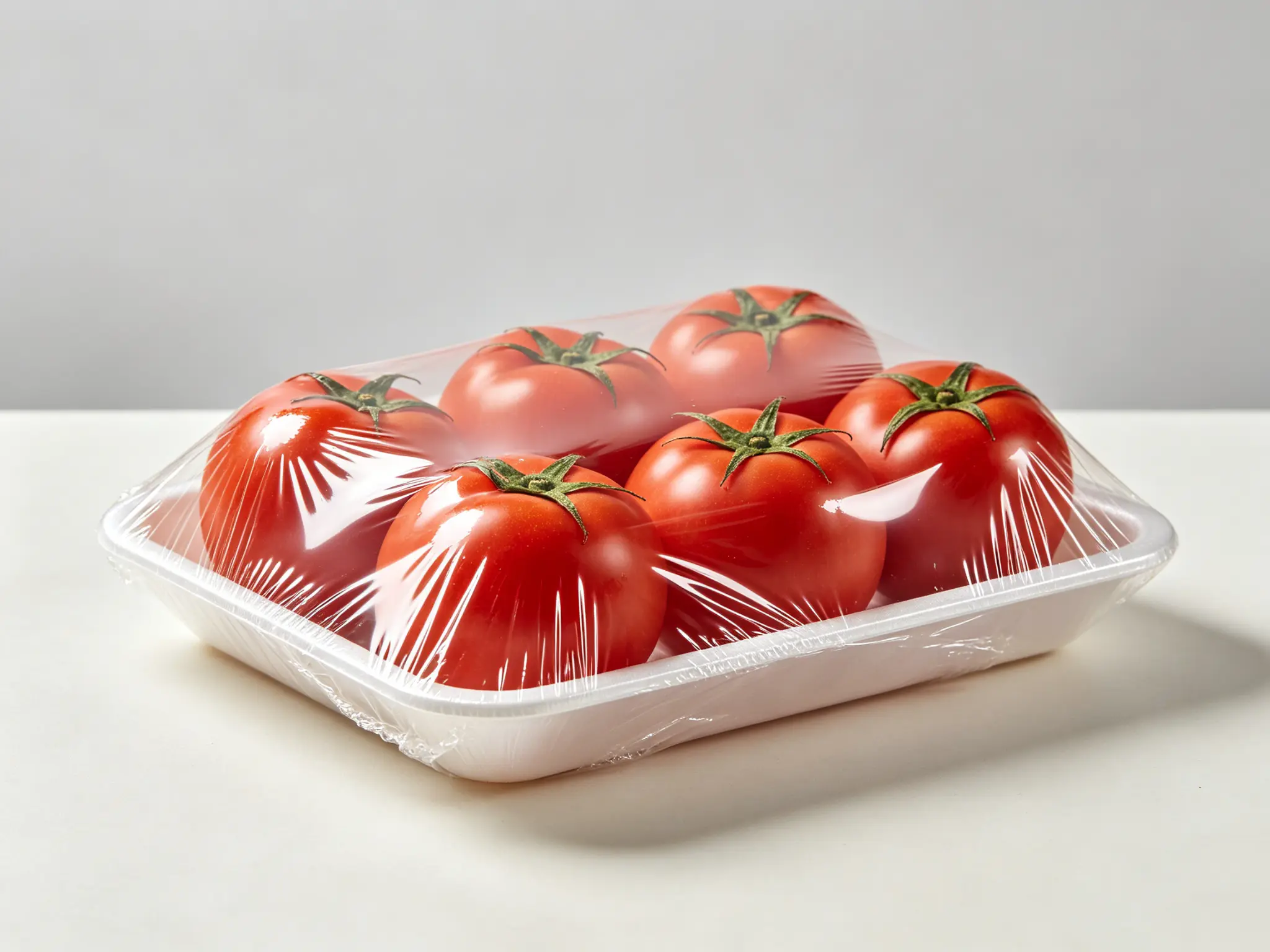
Shrink film such as POF wraps the tray together with the product and shrinks tightly to the shape after heating. Pre-packed fresh produce and bakery items in supermarkets are typically done this way. Products stay dust-free, hygienic and neat, without items falling apart. POF is chlorine-free and more environmentally friendly than PVC shrink film, which also matters for export markets.
How to Choose the Right Tray Packaging Bags
When comparing tray packaging bags, keep four points in mind. First, look at how the product is displayed. Use OPP header bags for pegboard display, and PE flat bags for flat, high-volume packing. Second, check whether the bag contacts food, and confirm food-grade certification. Third, think about temperature. PE suits frozen and refrigerated products, while CPP suits hot sealing and heat-resistant needs. Fourth, weigh cost and sustainability. Biodegradable materials and down-gauging are becoming the default for more and more export orders. EU exports also require attention to plastic restriction and recycling rules. If you are still unsure, order samples of two or three materials. Pack your actual product, hang it on a hook and compare them side by side. The difference becomes obvious within minutes.
Frequently Asked Questions
Can header bags only be made of OPP? OPP is the mainstream choice because it is crisp, clear and supports the header well. When heavier items are involved, PE or laminated materials can be used instead. Check the production process with your supplier first.
How thick should the bag be? Thickness follows product weight and display needs. Light small items work with thin film around 30–40 microns, while heavy items need thicker film. Always confirm with samples before mass production.
What should we watch out for in EU exports? Confirm food-grade and EPR compliance, avoid restricted materials such as PVC, and prepare certificates for biodegradable materials. Regulations change over time, so verify the latest requirements with your supplier or a compliance advisor.
Can I add a header card to a flat bag? Yes. Any flat bag can be upgraded into a header bag by attaching a header card with a punch hole. OPP is preferred for this upgrade because of its stiffness and clarity.
The tray holds the shape; the bag delivers the look. Choose the right tray packaging bags material, and your product will stand firm and look great on the shelf.