
Basic Knowledge: Apparel Bag Thickness Units & Conversion Standards
Understanding professional thickness units avoids communication errors with packaging suppliers during customization. The most common units in the apparel packaging industry are micron (μm) and mil, while Chinese manufacturers commonly use “silk” for thickness measurement.
Unified conversion formula: 1 mil ≈ 25.4 μm, 1 silk = 10 μm
In short, the higher the micron value of an apparel packaging bag, the thicker, tougher, and more durable the bag, and the higher the material cost. Thin and lightweight clothing such as T-shirts, underwear, and socks matches thin packaging bags, while heavy and rigid garments like jeans, coats, and down jackets require thickened clothing bags for sufficient protection.
Mainstream Apparel Packaging Bag Materials: Thickness, Pros, Cons & Use Cases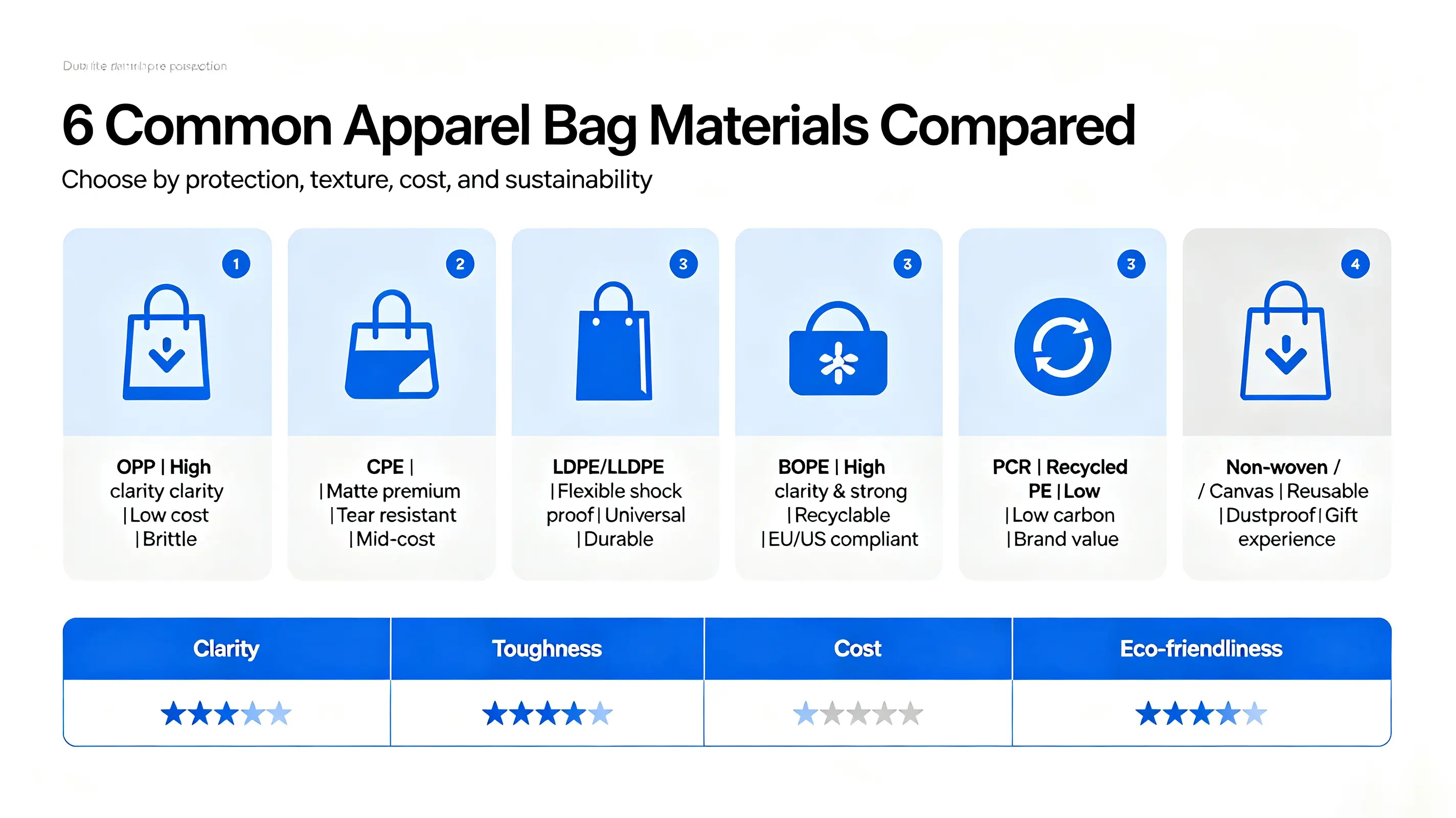
1. OPP Clear Bag – High Transparency & Low Cost, Best for Fast Fashion
The OPP clear clothing bag (Biaxially Oriented Polypropylene) is the most basic and widely used lightweight packaging material for apparel retail and cross-border shipping. Featuring ultra-high transparency and low cost, OPP is the standard apparel packaging bag for fast fashion and affordable clothing brands. The crisp, glossy surface perfectly restores garment colors and fabric textures, delivering an excellent product display effect for bulk apparel shipments.
Standard Thickness Range: 25–30μm (2.5–3 silk)
Core Advantages
-
Ultra-high light transmittance without color difference, perfectly showcasing clothing style and colors
-
Low printing cost with clear and delicate custom patterns, ideal for bulk printing
-
Ultra-lightweight with no extra logistics weight, effectively saving shipping fees
-
High cost performance, suitable for large-scale daily packaging
Material Disadvantages
OPP clothing bags perform poorly in low temperatures and tend to become brittle and crack during cold cross-border transportation. The hard and inelastic structure easily breaks under extrusion. In addition, OPP bags generate static electricity and easily absorb dust and lint, affecting packaging cleanliness.
Applicable Scenarios: Short-term packaging and in-store display of lightweight garments such as T-shirts, shirts, chiffon dresses, and socks; daily shipments and room-temperature warehouse storage for fast fashion brands. It is the most cost-effective clothing bag material for affordable apparel.
2. CPE Matte Bag – Premium Frosted Texture & Tear Resistance for Mid-to-High-End Apparel
The CPE matte clothing bag (Chlorinated Polyethylene) is an upgraded version of ordinary PE bags and a mainstream packaging choice for mid-to-high-end cross-border independent store clothing brands. This frosted apparel packaging bag features an exquisite matte finish with a minimalist premium look. Compared with glossy OPP bags, CPE significantly enhances brand grade while offering superior toughness and wear resistance for long-distance cross-border transportation.
Standard Thickness Range: 30–50μm (3–5 silk)
Core Advantages
-
Elegant frosted matte texture that greatly upgrades brand positioning
-
Soft yet tough, outstanding tear and puncture resistance for safe long-haul shipping
-
Anti-static performance prevents dust and lint adhesion, maintaining high packaging cleanliness
-
Wide temperature adaptability, no cracking in cold weather or deformation in high heat
Material Disadvantages: CPE clothing bags cost slightly more than OPP clear bags. The low light transmittance cannot display garment details intuitively, making it unsuitable for product display-focused packaging.
Applicable Scenarios: Mid-to-high-end clothing such as knitwear, casual wear, and thin coats; cross-border long-distance logistics and zipper self-sealing storage packaging. Ideal for apparel brands focusing on texture and protection.
3. LDPE/LLDPE Bag – Flexible Shockproof All-Purpose Apparel Packaging
LDPE and LLDPE high-pressure PE clothing bags are the most versatileall-round apparel packaging bag materials in the garment industry. LLDPE is an optimized version with stronger tensile strength and tear resistance. The soft, foldable material provides excellent cushioning and moistureproof performance, suitable for most clothing categories and cross-border logistics and storage scenarios.
Standard Thickness Range
-
Light-duty (T-shirts, underwear, socks): 20–25μm
-
Standard-duty (Dresses, casual pants, hoodies): 25–35μm
-
Heavy-duty (Coats, jeans, thick outerwear): 35–60μm
Core Advantages
-
Excellent flexibility, fold resistance, and compression resistance, perfect for stacked transportation
-
Superior tightness and moisture resistance, preventing garments from getting damp and moldy during sea shipping and humid environment transportation
-
Stable material performance, adaptable to extreme temperatures for global shipping
-
Customizable thickened versions with strong load-bearing capacity for heavy apparel
Material Disadvantages: Ordinary PE clothing bags have average transparency and printing precision, inferior to OPP clear bags, making them less suitable for high-end display packaging.
Applicable Scenarios: Universal packaging for all daily clothing, especially suitable for cross-border long-distance logistics, stacked warehousing, and humid region transportation. Thickened PE bags are the best choice for heavy and rigid garments and rank as the most practical all-purpose apparel packaging bag.
4. BOPE Eco Bag – High Transparency & Recyclable, EU & US Compliance Packaging
BOPE eco-friendly clothing bags are new sustainable packaging materials popular in European and American cross-border markets. Combining the high transparency of OPP clothing bags and the soft toughness of PE clothing bags, BOPE features single-layer recyclability, fully complying with overseas environmental regulations. It is the top upgraded apparel packaging for high-end sustainable fashion brands.
Standard Thickness Range: 30–40μm
Core Advantages
-
Near-OPP transparency with soft non-brittle texture, balancing aesthetics and practicality
-
Ultra-high tensile and puncture resistance, delivering strong protection with thin thickness for lightweight packaging
-
Single-layer recyclable material compliant with EU and US environmental packaging laws, avoiding customs inspection risks
-
Smooth crease-free printing for premium custom brand patterns
Material Disadvantages: BOPE eco-friendly clothing bags are more costly than OPP and ordinary PE bags, not suitable for ultra-low-budget mass affordable clothing packaging.
Applicable Scenarios: High-end designer apparel and custom clothing; eco-focused cross-border independent stores and European and American local fashion brands. It is the most compliant eco-friendly apparel packaging bag for Western markets.
5. PCR Recycled PE Bag – Low-Carbon Sustainable Packaging for Brand Empowerment
PCR recycled PE clothing bags are manufactured from post-consumer recycled plastic particles, serving as the core packaging choice for international fashion and cross-border brands responding to low-carbon environmental policies. While maintaining reliable apparel packaging bag protection performance, PCR materials greatly reduce carbon emissions and build a green brand image in line with global sustainability trends.
Standard Thickness Range: 30–45μm
Core Advantages
-
Low-carbon and eco-friendly, conforming to global sustainable development and regional environmental regulations
-
Stable performance with identical toughness and protection as virgin PE material
-
Unique recycled material logo highlights brand social responsibility and improves brand premium
Material Disadvantages: PCR recycled clothing bags have a slight natural foggy finish with low transparency and higher customization costs than ordinary apparel packaging bags.
Applicable Scenarios: Eco-positioned cross-border independent stores, boutique clothing stores, and foreign trade e-commerce platforms, suitable for all conventional apparel packaging and sustainable cross-border packaging solutions.
6. Non-woven & Cotton & Canvas Bags – Reusable Premium Dust-Proof & Gift Packaging
Different from disposable plastic apparel packaging bags, fabric clothing bags are reusable high-end packaging solutions focusing on long-term dust-proof storage and brand gift packaging. They effectively improve customer unboxing experience and enhance repurchase loyalty, widely used for high-end garment long-term protection and brand packaging upgrading.
Specification & Application
-
Non-woven Fabric (NWPP): 50–80GSM (light dust-proof type), 80–110GSM (standard protective type); lightweight, breathable, dust-proof, and cost-effective, ideal for long-term clothing dust storage and brand gift packaging.
-
Cotton & Canvas: 6–8oz (light breathable type), 12–16oz (thick shaped type); premium natural texture, exquisite printing effect, durable and reusable, perfect for high-end brand gift boxes and after-sales customer storage.
Apparel Packaging Selection Chart: Best Material & Thickness by Clothing Type
To help cross-border sellers and apparel merchants complete accurate apparel packaging bag material and thickness selection and avoid packaging damage and cost waste, we have sorted out the optimal matching solutions for full-category clothing:
-
Lightweight Apparel (T-shirts, underwear, socks): OPP 20–25μm / LDPE 20–25μm
-
Daily Casual Apparel (Shirts, pants, thin dresses): CPE 25–30μm / LDPE 25–35μm
-
Mid-to-High-End Apparel (Knitwear, designer clothes): BOPE 30–40μm / PCR 30–45μm
-
Thick & Rigid Apparel (Coats, jeans, down jackets): Thickened LDPE 40–60μm / CPE 45–50μm
-
Long-Term Warehouse Dust-Proof Storage: Non-woven 80–110GSM / Cotton & Canvas 8–12oz
Cross-Border Seller Packaging Tips: Material & Thickness Selection Guide
1. Balance clothing bag cost and protection: Avoid ultra-thin low-cost apparel packaging bags. Substandard material and thickness cause shipping damage, negative reviews, and return losses that far exceed packaging savings.
2. Match materials with brand positioning: Budget fast-fashion brands choose OPP and ordinary PE clothing bags for cost control; premium eco-friendly brands adopt CPE, BOPE, and PCR recycled clothing bags to upgrade brand grade and premium value.
3. Select thickness according to shipping scenarios: For long-distance sea/air shipping and cold/humid regions, use thickened, low-temperature resistant, and moistureproof apparel packaging bags to prevent bag cracking and garment damp damage.
4. Comply with overseas environmental policies: European and American markets enforce strict plastic packaging regulations. Prioritize BOPE and PCR recyclable clothing bags to avoid customs clearance risks and meet local eco-standards.
Conclusion
Apparel packaging bags are far more than simple protective accessories; they are core components of brand marketing, user experience, and cost management. The selection of apparel packaging bag material and clothing bag thickness directly determines garment protection quality, logistics expenditure, brand image, cross-border clearance efficiency, and store reputation.
By selecting targeted packaging materials and thicknesses based on your clothing categories, brand pricing, and sales regions, you can effectively optimize cross-border operating costs, reduce after-sales damage issues, and deliver brand professionalism and refined operation to global customers through packaging details.