
What Is Pearl Film? Uses, Benefits & Applications
Walk down a supermarket aisle and you’ll spot it before you can name it: ice cream wrappers with a soft white glow, chocolate bars that look smooth and expensive, shampoo labels with a silky, sophisticated finish. That look usually comes from the same material. Pearl film.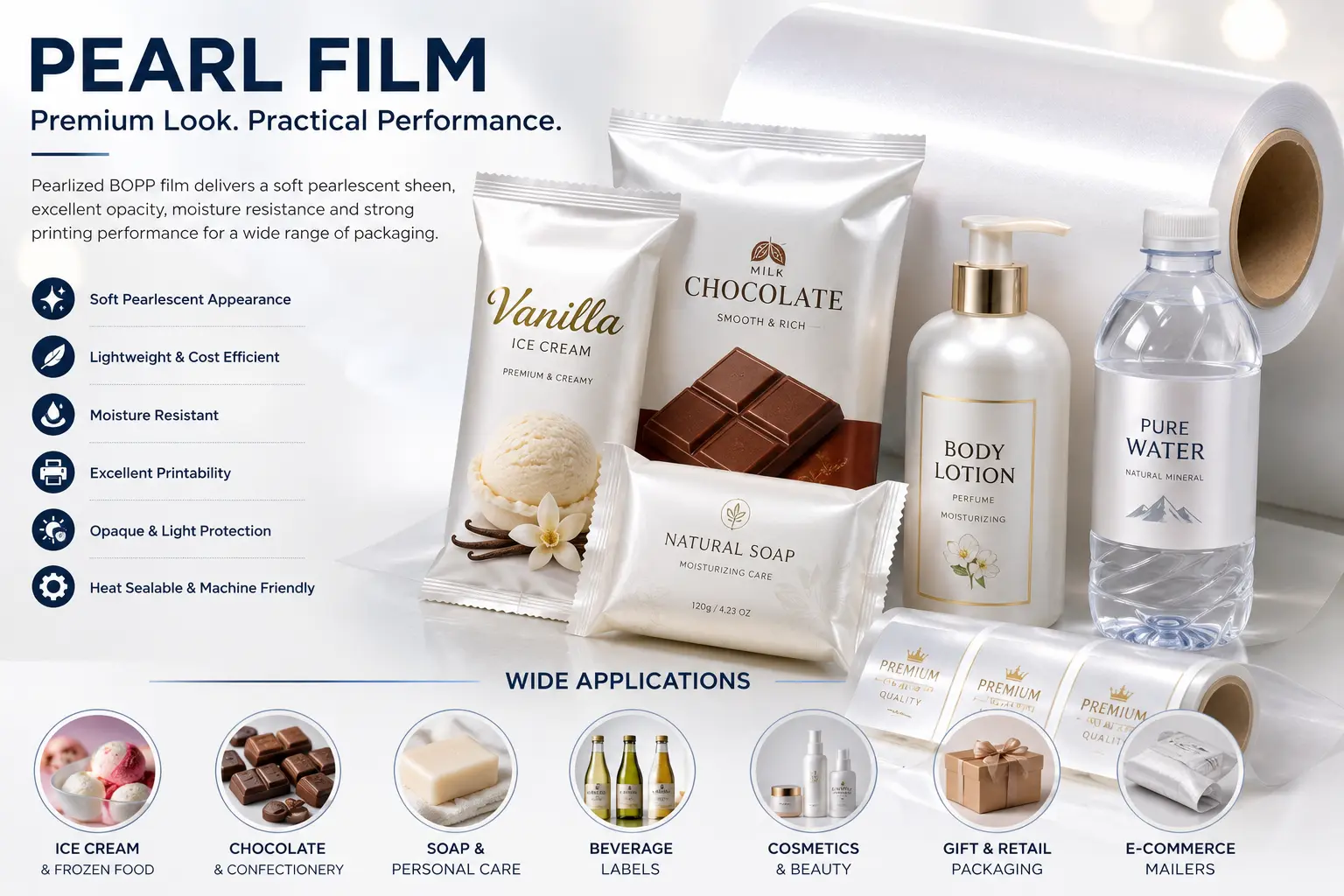
Pearl film, also called pearlescent film, pearlized BOPP film, or BOPP pearl film, is a white, biaxially oriented polypropylene film with a soft pearl-like sheen. It shows up in food packaging, labels, personal care products, and premium consumer packaging. And it’s not just about looks. The lightweight structure, opacity, moisture resistance, and printing performance make it a practical pick for manufacturers too.
What pearl film actually is
Pearl film starts as polypropylene resin. During production it’s stretched in two directions, and special additives create a micro-voided structure inside the film. Those microscopic voids scatter light, which is what produces the soft, pearlescent sheen.
The effect is subtle compared to metallic or holographic film. No mirror shine, no rainbow pattern. Just a clean, white, slightly dimensional surface that reads as premium without trying too hard.
Depending on the grade, pearlized BOPP film can also offer:
- High opacity (it hides what’s inside)
- Low density (more area per kilogram)
- Good stiffness
- Moisture resistance
- A clean printing surface
- Optional heat sealing
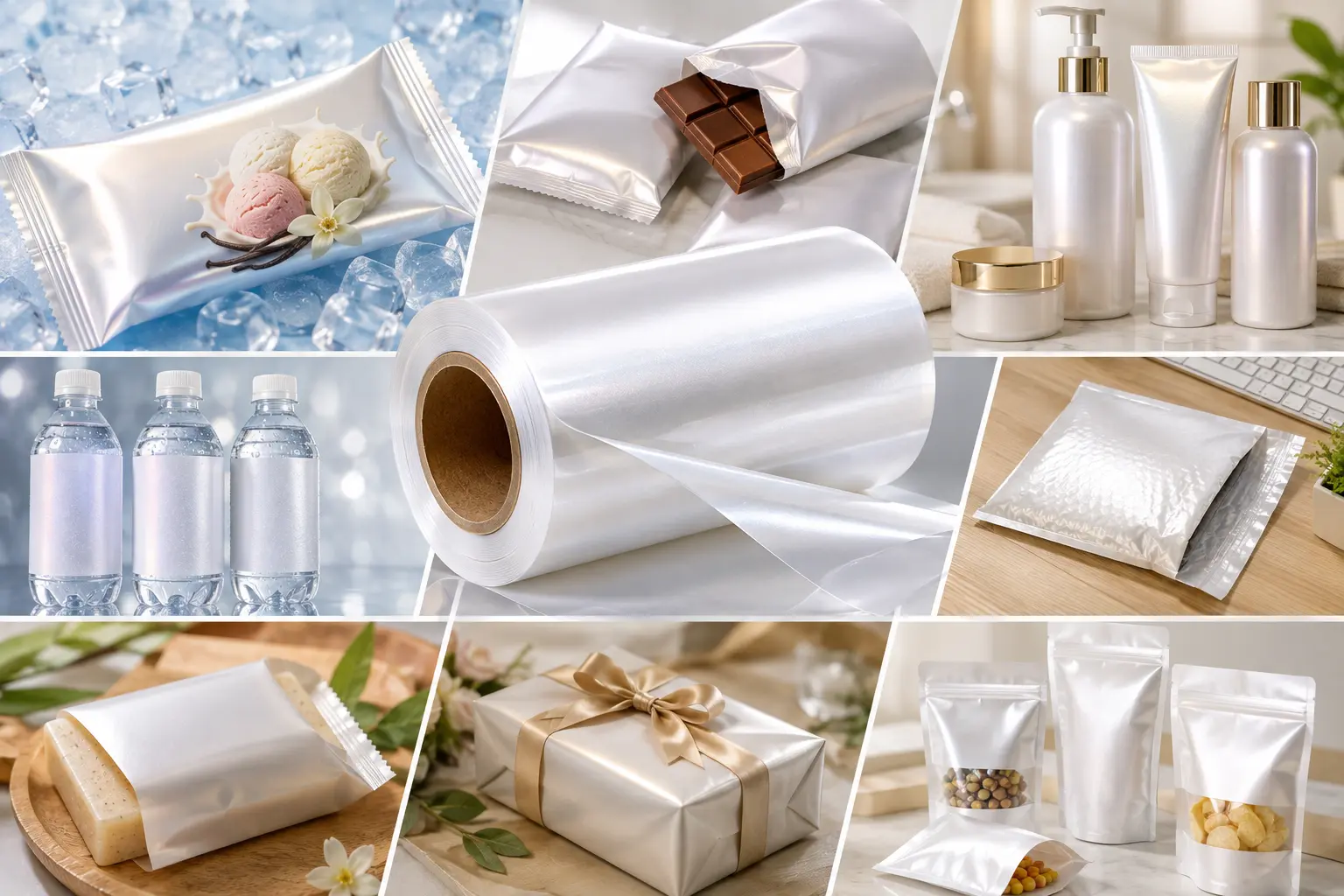 Why the look matters
People judge packaging before they touch the product. A pearlized surface adds visual depth without being overly reflective, so it stands out under retail lighting without looking flashy. For brands that want a premium feel without metallic foil or expensive decorative materials, it’s a reliable middle ground.
Where pearl film gets used
- Ice cream and frozen food. The best-known application. Pearl film survives freezer temperatures, resists moisture, and gives frozen desserts a bright, clean look.
- Chocolate and confectionery. The soft sheen makes candy feel more refined while keeping colors vivid and details crisp.
- Soap and personal care. Wraps and labels for soap, shampoo, and body care need a clean, polished look, and the moisture resistance helps in damp bathrooms.
- Beverage labels. Water, soft drinks, beer, wine, and spirits all use pearlized labels for depth without metallic decoration.
- Cosmetics and gift packaging. Cosmetic boxes, beauty products, and seasonal gift wrap benefit from small visual details like this.
- E-commerce packaging. Pearlized mailers, envelope bags, and bubble mailers turn shipping into part of the unboxing experience.
Pearl film vs. holographic film
Both make packaging eye-catching, but differently.
| Pearl film | Holographic film | |
|---|---|---|
| Visual effect | Soft pearlescent glow | Rainbow, diffraction effect |
| Vibe | Elegant, subtle | Bold, energetic |
| Best for | Everyday premium packaging | Promotions, special editions |
| Printing background | Soft white, opaque | Reflective, decorative |
Simple version: choose pearl for subtle luxury, holographic for maximum attention. Many brands keep pearl as the everyday workhorse and use holographic for special editions.
Thickness and ordering notes
Pearlized BOPP film is commonly available in the 20–50 micron range. The right spec depends on your packaging machine, product weight, required stiffness, printing method, sealing requirements, and whether the film will be laminated.
Two things worth doing before you commit to a big order:
- Test samples on your actual line. Check printing quality, ink adhesion, heat sealing, machine speed, film tension, and frozen storage performance if it applies.
- Think about recyclability early. Pearl film is polypropylene-based, but recyclability depends on the whole structure. A mono-material design recycles differently from a multi-layer laminate, so confirm what your target market’s recycling systems accept.
Pearl film FAQ
Is pearl film waterproof? It resists moisture well and performs fine in humid or refrigerated environments. The exact level depends on the grade and the packaging structure.
Can you print on pearl film? Yes. After surface treatment it takes gravure, flexo, and other printing processes cleanly, which is why it’s common for packaging graphics.
What is pearl film mainly used for? Ice cream and frozen food, chocolate and confectionery, soap and personal care, beverage labels, cosmetics, and promotional or e-commerce packaging.
What’s the difference between pearl film and normal BOPP film? Standard BOPP film is usually clear or plain opaque with no pearlescent effect. Pearlized BOPP uses a micro-voided structure for a white, soft-shimmering look and lower density.
Pearl film or holographic film? Neither is universally better. Pearl for subtle, elegant, premium packaging; holographic when you want a bold, colorful effect.
A final practical note
Pearl film isn’t a miracle material, but it does one thing reliably: it makes packaging look more expensive without adding much cost or complexity. If you’re after a soft, premium feel for high-volume packaging, it’s a solid place to start. Test it on your line first, and check the recycling story with your supplier.