
A Simple Breakdown of Two Key Categories
“Renewable materials” is a common term in sustainable packaging, but it refers to two very different groups of film solutions, not one single material.
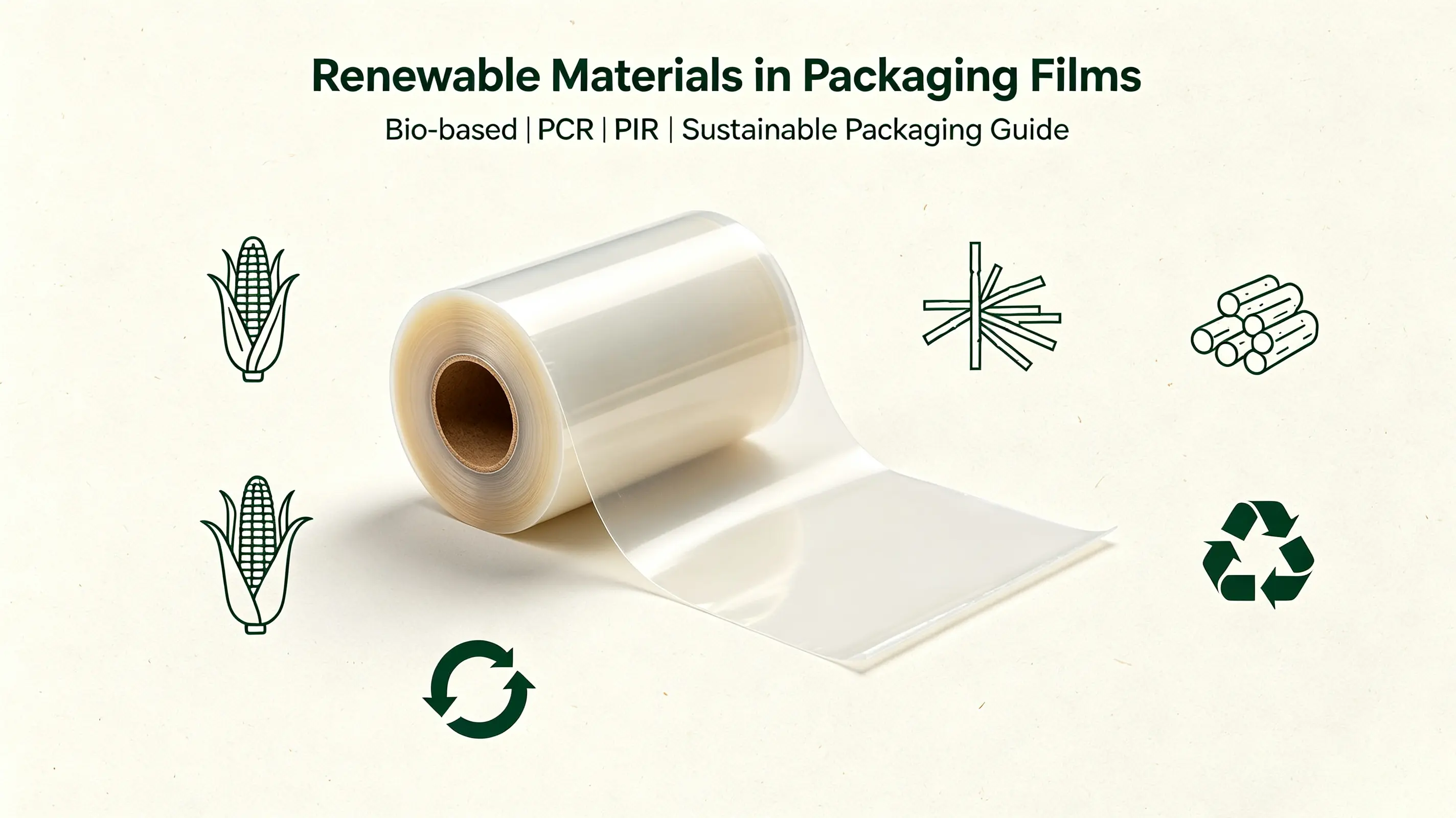
Bio-based Renewable Films
These are produced from renewable biomass feedstocks — such as corn starch, sugarcane, farm straw and cellulose — rather than fossil-based plastic resins. Typical examples include PLA (polylactic acid), PHA (polyhydroxyalkanoates), starch-based films and cellulose films. Most are biodegradable with a much lower carbon footprint. With modern processing, they can match the clarity and heat-seal performance of standard PE films, working well for fresh produce, snacks and light goods packaging.
Post-consumer Recycled (PCR) Films
PCR is made from plastic waste already used by end consumers — things like empty beverage bottles and old packaging bags. After collection, sorting, cleaning and re-pelletizing, the material is turned into brand-new packaging films. Factory production scrap (known as PIR) does not qualify. Only PCR counts toward official recycled content requirements under regulations like the EU’s PPWR. Recycled PE (rPE) and rPET films are the most widely used types for courier bags and pallet stretch wraps.
Common Misconceptions
- Renewable ≠ biodegradable: Recycled PE film is classified as renewable but does not biodegrade naturally.
- Bio-based ≠ compostable: Degradability requires dedicated certification — not all bio-based films can be composted.
References:
European Bioplastics – Global Bioplastics Market Data
GB/T 37422-2019 Evaluation Method and Criterion for Green Packaging