
Have you ever opened a bag of chips and noticed the shiny silver layer inside? That reflective surface is usually metallized film packaging—a widely used solution for chips, nuts, biscuits, jerky, candy, and other snacks.
Compared with ordinary plastic film or pure aluminum foil, metallized packaging film offers a practical balance of barrier protection, flexibility, cost efficiency, and attractive appearance.
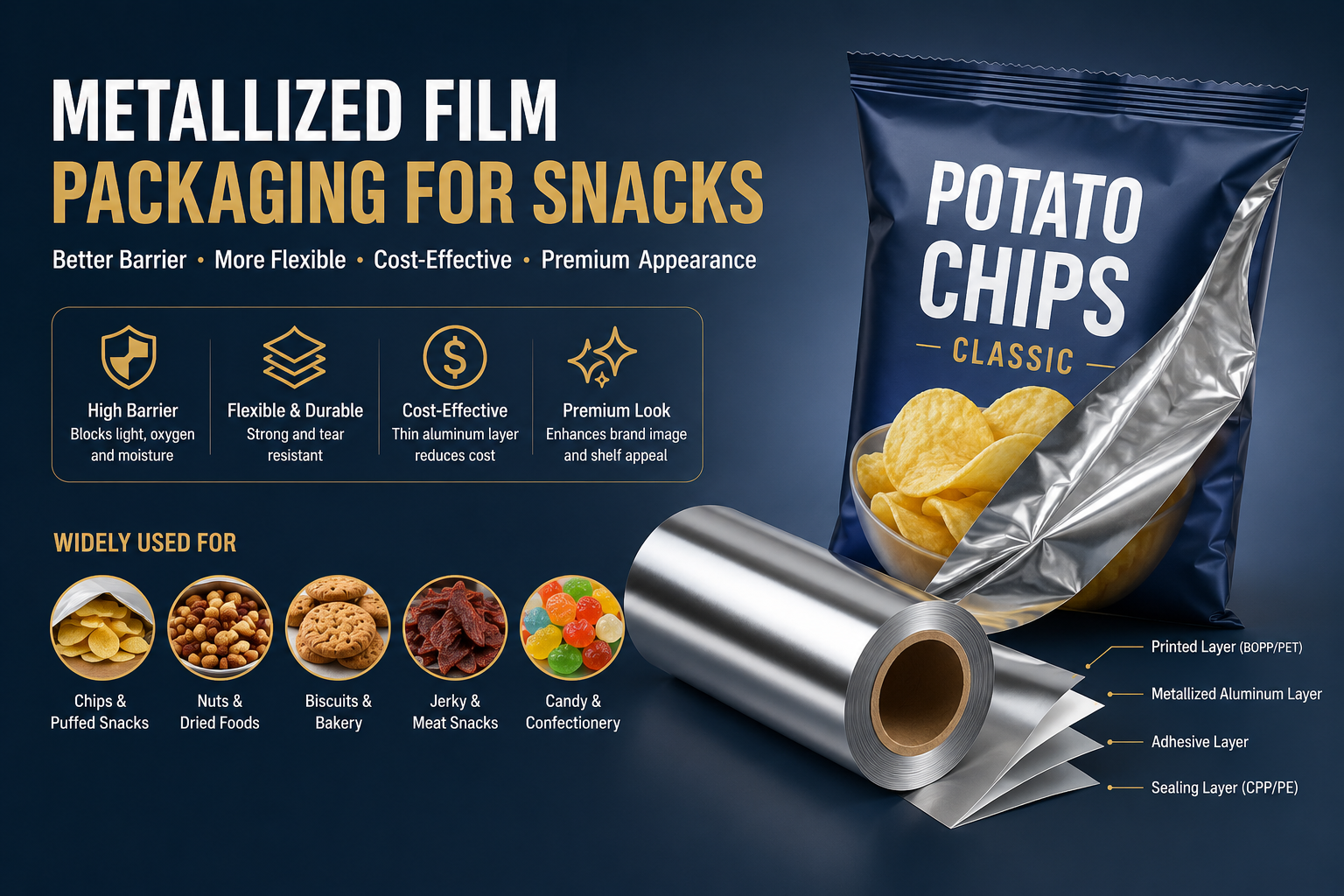
1. Better Protection Against Light, Oxygen and Moisture
Freshness is the biggest challenge in snack packaging.
Crispy foods can quickly lose their texture when exposed to moisture, while nuts and other high-oil products may oxidize and develop unpleasant flavors. Light exposure can also accelerate quality deterioration.
Metallized film is typically produced by vacuum-depositing an extremely thin aluminum layer onto a plastic substrate such as PET, BOPP or CPP. The metallized layer helps reduce the transmission of light, oxygen, and water vapor, helping snacks stay fresh and crispy for longer.
2. More Flexible Than Aluminum Foil
Pure aluminum foil provides excellent barrier performance, but it can crease or develop pinholes during repeated folding and handling.
Metallized film combines the protective properties of aluminum with the flexibility and toughness of plastic film. This makes it well suited for:
- 🥔 Potato chips and puffed snacks
- 🥜 Nuts and dried foods
- 🍪 Biscuits and bakery products
- 🥩 Jerky and high-value snacks
- 🍬 Candy and confectionery packaging
For high-speed packaging and long-distance transportation, flexibility can be just as important as barrier performance.
3. A More Cost-Effective Packaging Solution
One major advantage of metallized film is that it uses only a very thin aluminum coating rather than a full layer of aluminum foil.
This helps manufacturers achieve strong packaging performance while controlling material costs. Metallized films can also be laminated with PE, CPP, or other functional layers to create customized structures for different food products and packaging machines.
4. Premium Shelf Appearance
Metallized film is not only functional—it also improves visual impact.
The metallic surface can enhance printing effects, improve color contrast, and create a more premium appearance for snack brands. Whether used as an internal barrier layer or as part of a printed laminated structure, metallized packaging helps products stand out on crowded retail shelves.
Metallized Film vs. Aluminum Foil Packaging
| Feature | Metallized Film | Aluminum Foil |
|---|---|---|
| Barrier Performance | Excellent | Extremely High |
| Flexibility | Excellent | Moderate |
| Weight | Lightweight | Heavier |
| Cost | More economical | Higher |
| Printing & Appearance | Excellent | Good |
| High-Speed Packaging | Highly compatible | Depends on structure |
Final Thoughts
Metallized film has become a popular choice for snack packaging because it combines freshness protection, flexibility, attractive appearance, and cost efficiency.
For chips, nuts, biscuits, jerky, and many other food products, a properly designed metallized film structure can help protect product quality while supporting efficient commercial packaging.
Looking for customized metallized PET, BOPP, or food packaging film solutions? Choosing the right film structure, thickness, and sealing layer can make a significant difference in both shelf life and packaging performance.