
BOPP (biaxially oriented polypropylene) film is one of the most widely used packaging substrates in the world. The reason is simple: it combines high clarity, strong mechanical performance, excellent moisture barrier, good printability, and recyclability, then branches into application-specific grades such as heat seal film, cigarette film, glossy film, and matte film — covering food, tobacco, pharmaceutical, personal care, electronics, and printing packaging. The global BOPP film market reached about US$26.07 billion in 2025, with Asia-Pacific holding a 39.14% share and food packaging alone driving roughly 68% of demand. Understanding this “scenario-by-scenario” logic is the key to understanding why BOPP is everywhere.
Why BOPP Can “Win Everywhere” in Packaging
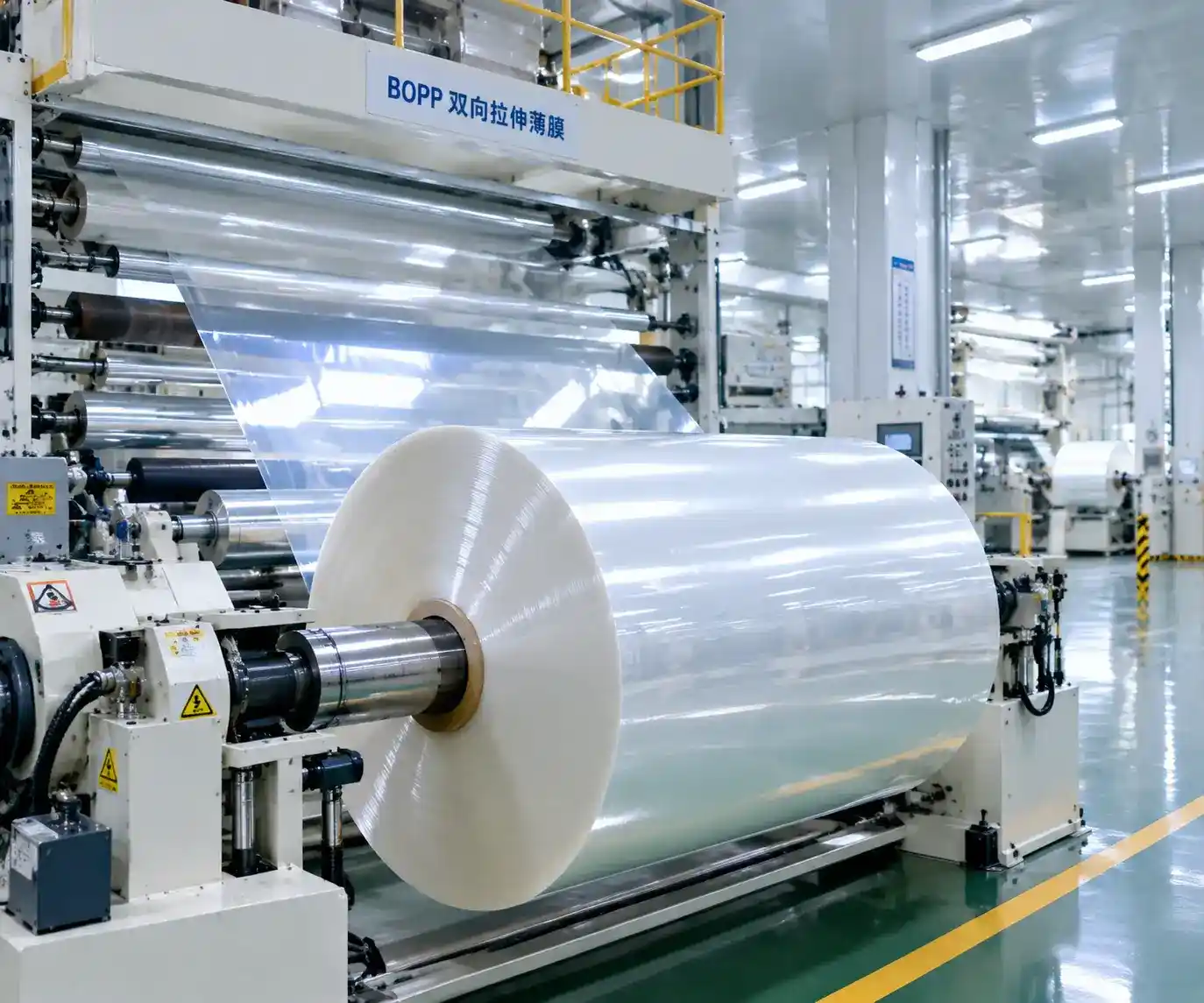
BOPP starts from polypropylene pellets, co-extruded into a flat sheet, then stretched in both the machine and transverse directions. This biaxial orientation aligns the polymer chains in-plane and delivers three core benefits at once: significantly higher tensile strength, dramatically improved clarity and gloss, and better water-vapor barrier. On top of that, BOPP is lightweight, odorless, food-contact safe, and thermoplastic — scrap can be melted and recycled. That solid base is what makes it so adaptable: add a sealant layer for heat sealing, a matte layer for anti-glare, or tuned stretching for shrink performance. In short, BOPP’s broad reach comes from its customizable process flexibility.
Heat Seal Film: From “Cannot Seal” to “High-Speed Sealing”
As-produced BOPP has high crystallinity and shrinks when heated, so it cannot be heat-sealed directly. The solution is straightforward: co-extrude a heat-seal resin layer on the surface. With an initial seal temperature usually above 100°C and consistent seal strength, it fits high-speed automatic packaging lines. Single-side sealable film goes to printed lamination and bag making, while double-side sealable film forms pouches directly. Typical uses include biscuits, candy, chocolate, seaweed, and dairy packaging, plus non-food items such as straws, masks, stationery, and hotel disposables. The 15–50 μm thickness range lets it match different packaging machines. You can see the full specs on our BOPP heat-sealable film product page; seaweed and mask scenarios mentioned above also have dedicated grades, such as BOPP seaweed packing film and BOPP mask heat sealing film.
Cigarette Film: The Most Demanding Application
Tobacco packaging is arguably the strictest test for BOPP film. A pack must wrap reliably at 400–600 packs per minute without jamming, sticking, or wrinkling. That requires low seal temperature, high gloss (haze below 1.2%), excellent slip and anti-static properties, and precisely tuned shrinkage. Compared with cellophane or coated PVC, BOPP cigarette film wins on optics, moisture barrier, and stiffness. Regular-grade film offers 2–5% shrinkage for soft packs and standard cartons, while shrink-type film exceeds 7% for hard cartons, eliminating looseness and wrinkles. With about 1.9 trillion cigarettes produced annually, China alone consumes roughly 70,000 tons of cigarette film — a volume that says everything about BOPP’s irreplaceable role here. Our BOPP tear tape cigarette film is engineered specifically for these high-speed wrapping lines.
Glossy vs Matte Film: Same Substrate, Two Personalities
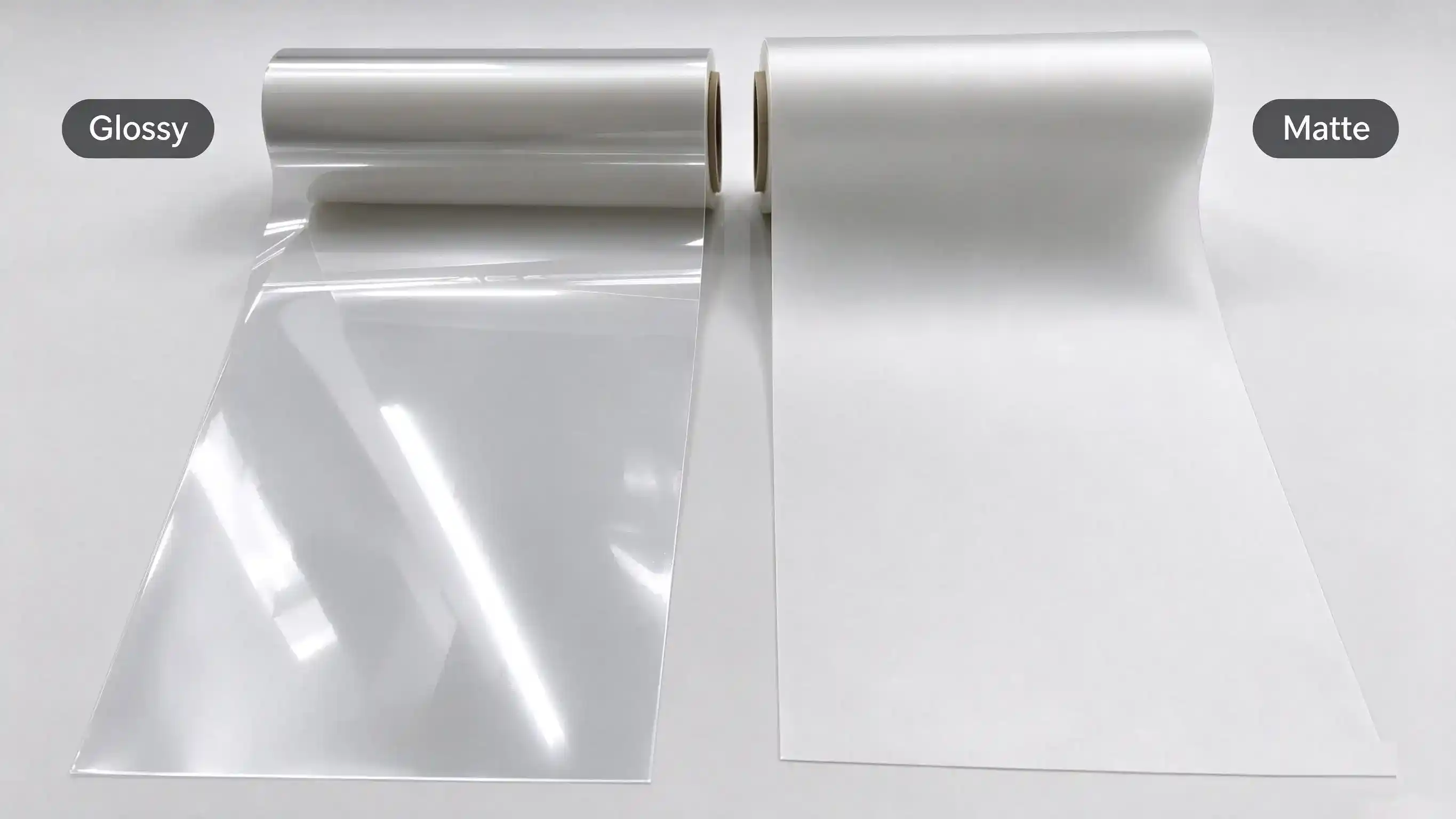
If heat seal and cigarette films solve “function,” glossy and matte films solve “brand perception.” Both start from the same BOPP substrate; the difference is surface treatment:
- Glossy film (BOPP Glossy Film): mirror reflectivity above 85%, lifting printed color saturation by 20–30% — ideal for consumer electronics, promotional posters, and toy packaging where logos and metallic ink need to pop.
- Matte film (BOPP Matte Film): a matte masterbatch scatters light for a soft anti-glare finish with 60° gloss below 10 GU — widely used on high-end book covers, cosmetics, luxury goods, and business gift packaging.
Matte film costs about 20–35% more to produce because of the matte masterbatch and yield limits, but the “premium feel” usually pays back in brand value. For boxed high-end food, matte lamination also lifts shelf presence.
Sustainability and What Comes Next
BOPP’s reach keeps expanding, and sustainability is the new frontier. As a thermoplastic, scrap can be melted, re-pelletized, and reused as raw material. Consumer-recycled content (PCR) BOPP is already in commercial use — for example, PureCycle and Innovia validated white cavitated BOPP film with over 40% PCR for candy wrappers, ice cream packaging, and roll labels. Meanwhile, BOPP is gaining ground in pharmaceutical packaging, electronic labels, optical display films, and EV battery components.
Bottom Line
BOPP film is everywhere because it balances “good enough at the base” with “highly customizable.” Heat seal film solves sealing, cigarette film solves high-speed precision packaging, and glossy/matte film solves brand expression — while recycled content and new industries keep the system growing. For packaging buyers and product developers, understanding this scenario-by-scenario logic beats memorizing spec sheets. Browse our BOPP heat-sealable film product page or contact us for a grade recommendation.