
A cost-push rally, not a demand recovery — and why film makers still ran negative margins
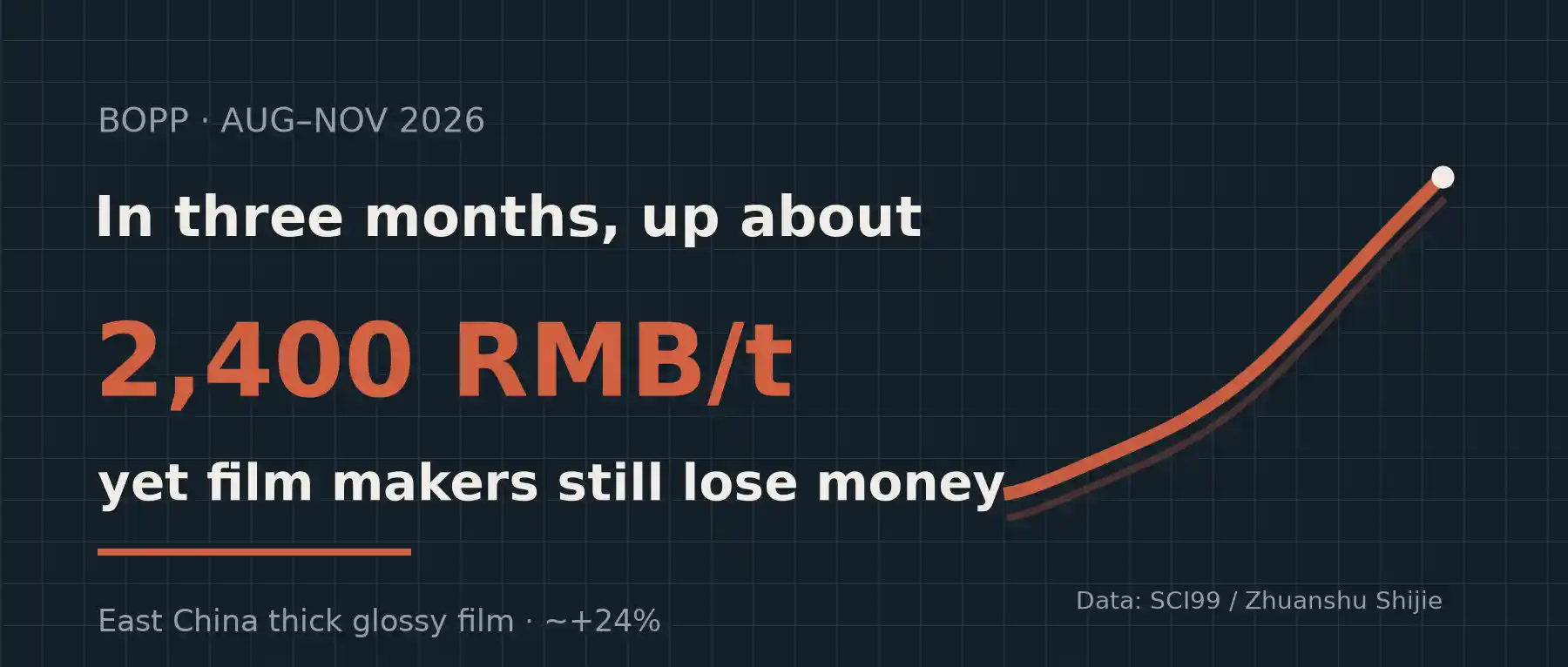
China’s thick gloss BOPP film price climbed about RMB 2,475 per tonne, roughly 24%, from early August to early November 2026. Yet film makers posted a negative per-tonne gross margin through the same quarter. That contradiction explains why quotes keep moving even when order books stay thin.
How much did the BOPP film price rise
On 2 November, mainstream indicative prices for thick gloss film in East China were RMB 12,600–12,950 per tonne. On 4 August, the same grade quoted RMB 10,100–10,500.
Using the mid-point of each range, the BOPP film price moved from about RMB 10,300 to about RMB 12,775 per tonne, up roughly RMB 2,475 or 24%. Comparing high and low ends separately gives 23% to 25%, so direction holds.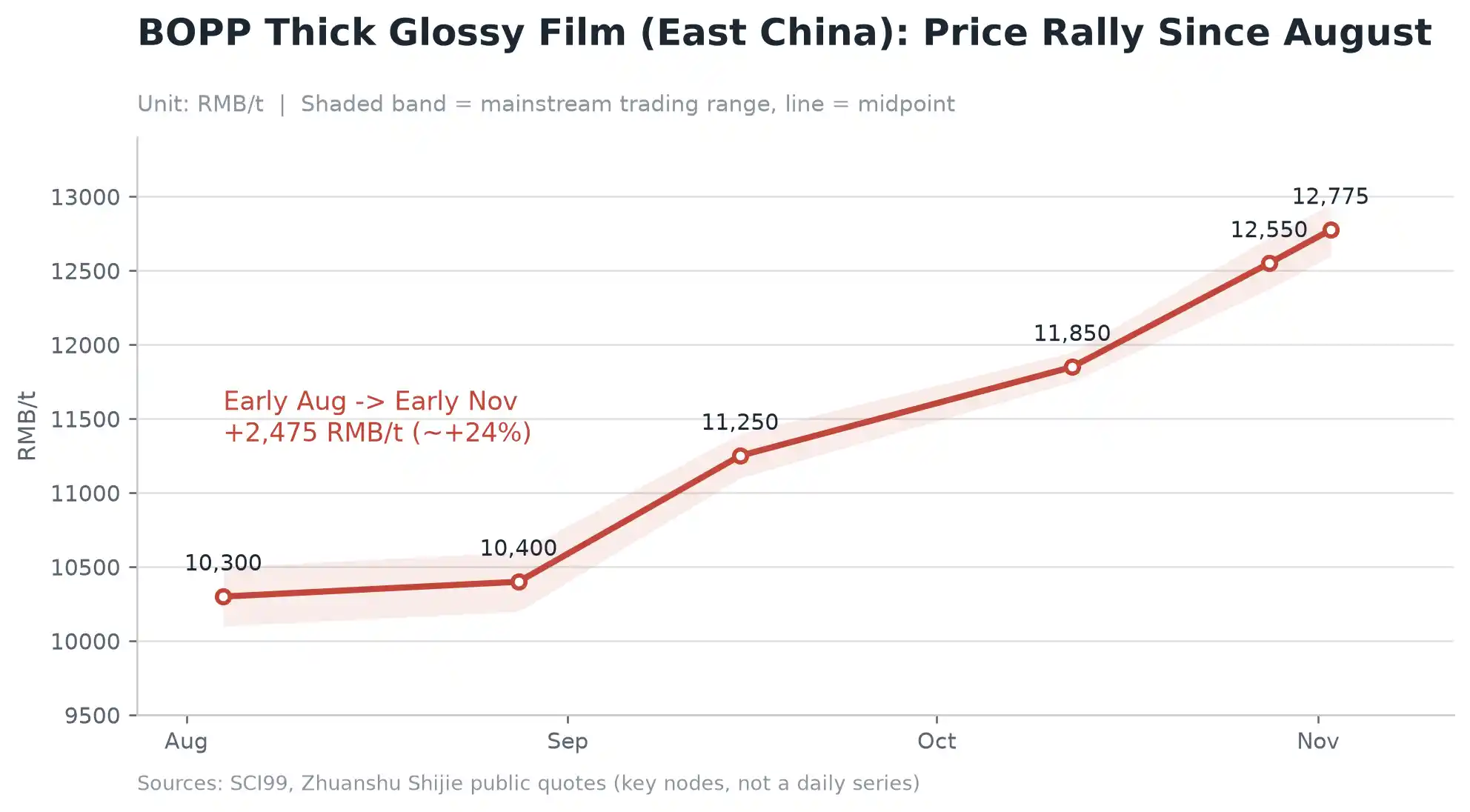
Upstream followed: polypropylene futures went from about RMB 8,500 per tonne in early August to RMB 10,364 on 3 November, up about 21%. Feedstock rose 20% and film rose slightly more.
The climb was uneven. August added only RMB 100 per tonne, September touched RMB 11,250, October reached RMB 11,850 on the 12th, and early November pushed to RMB 12,775 while actual deals lagged quotes. The base was already high, with third-quarter East China thick gloss film averaging RMB 10,450.76 per tonne, up 25.76% year on year.
The driver was cost, not demand
The rally started upstream, not in consumption. In October, Middle East tensions pushed Brent briefly above USD 110 per barrel and lifted the Hormuz shipping risk premium. Exports were not cut, but rerouting, insurance and freight raised landed costs for crude, propane and propylene together.
The shock reached polypropylene unevenly by production route. In the week of 22 October, oil-based cost rose 4.02% to RMB 10,001 per tonne, PDH-based rose 8.38% to RMB 11,609, and coal-based rose only 2.43% to RMB 8,220.
Route structure explains the gap: the oil route tracks crude and naphtha, PDH depends on imported propane and shipping, and coal-based production stays comparatively independent. Oil and PDH margins compressed hard, coal gained a relative advantage, and that split decided who cut output first.
Supply tightened instead of easing
High cost pushed PDH and some oil-based plants to cut rates, and through October the national polypropylene operating rate held near 65% while weekly output stayed below 690,000 tonnes. Maintenance losses reached 1.1351 million tonnes, East, North and South China took more than 65% of that loss, and tight spot supply explains much of why prices held.
Inventory behaved the same way. Mid-October commercial polypropylene inventory fell to 620,800 tonnes, down 9.73% month on month. Late October brought downstream resistance and a small rebuild in producer stock, the point where inventory pressure starts shifting downstream. New supply also came slowly, with fourth-quarter plants postponed, including Huajin Aramco into the first quarter of 2027 and Sinopec-SABIC Gulei.
BOPP matched the pattern. Third-quarter domestic output was 1.0159 million tonnes, down 101,600 tonnes quarter on quarter and 264,100 year on year, against capacity of 8.9134 million tonnes and five new lines adding 270,000 tonnes. By late October the BOPP operating rate sat near 46%, a multi-year low.
Why higher prices did not become profit
Here is where the story turns. Third-quarter gross margin for thick gloss BOPP averaged negative RMB 214.69 per tonne, down RMB 87.64 from the second quarter and RMB 47.38 year on year. Prices rose while unit profit fell.
One September estimate in industry media put the gap plainly: feedstock rose RMB 979 per tonne against RMB 750 on output prices, leaving about RMB 229 absorbed by the film maker and an implied loss near RMB 223 per tonne. The basis is debatable, but the pattern is not.
Film makers tried to pass cost through and downstream could not absorb it. Film feeds food packaging, household goods, apparel, labels and tape, and post-holiday demand plus early Double 11 restocking lifted utilisation only briefly. Converter margins stayed squeezed, factories bought for immediate needs, and a 46% rate shows orders could not fill capacity.
In short, film makers followed price to limit losses, not to earn. Offers rose and fell with feedstock.
Three signals to watch in November
Demand comes first. Seasonal demand is fading and producer inventory edged up in late October.
Offer softening comes second. On 5 November, most South China BOPP grades were revised down, with 18 μm gloss film cut RMB 150 per tonne. Quotes stay high while real deals concede.
Supply comes third. One new Guangdong line was due in November while maintenance stayed concentrated, so support holds for now. From the fourth quarter into 2027, restarts plus new capacity raise pressure.
The steadier read is a high-level stalemate: cost holds the floor, demand caps the ceiling.
Four indicators worth more than daily quotes
|
Indicator
|
What to watch
|
What it means
|
|
Polypropylene rate, maintenance
|
Weekly rate, output, outages
|
Fewer outages weaken support
|
|
Commercial inventory
|
Producer, trader and port stock
|
Drawdown turning to build often precedes a top
|
|
BOPP rate and margin
|
Operating rate, thick gloss margin
|
Negative margin keeps sellers firm
|
|
Crude and geopolitics
|
Brent, freight and insurance
|
Easing tension lowers the cost floor
|
What this means for overseas buyers
Split purchasing. Use staged orders instead of one locked position. A cost-driven high tends to fall faster than it rose.
State quote validity. Seven or fifteen days, written down, beats a vague open offer.
Price freight and currency in. Feedstock, sea freight and rates move together, and ignoring one distorts the landed number.
Where this analysis stops
The view assumes the geopolitical premium stays, restarts stay limited and demand holds. Easing tension and retreating crude weaken the cost floor first; clustered restarts with soft demand push prices down; volatile geopolitics and high crude keep correction limited.
Pricing power sits with cost and supply now and returns to demand later. Whichever loosens first sets the direction.
Browse our BOPP film product range and read more about OPP transparent film applications for packaging. For background on film structure, see biaxially oriented polypropylene.