1. Surging Crude Oil Prices Push Up Industrial Production Costs
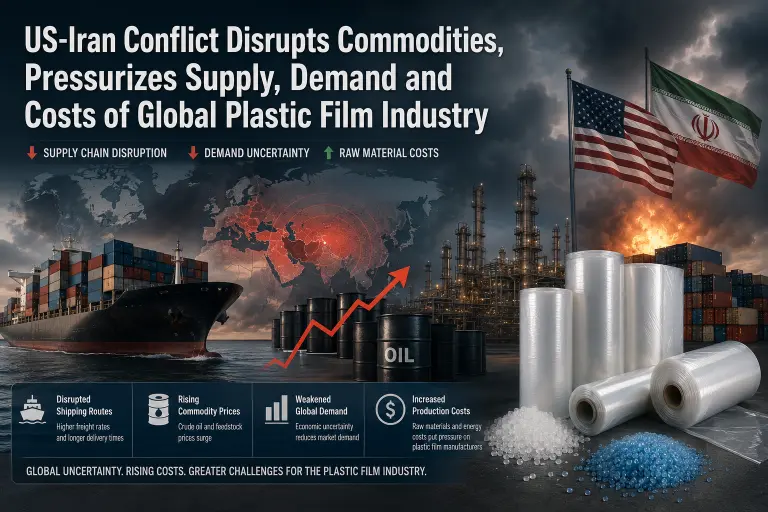
The plastic film sector depends heavily on petroleum-based raw materials. For this reason, it is highly sensitive to global crude oil price changes. First of all, the escalating US-Iran geopolitical conflict blocks core shipping routes in the Strait of Hormuz. Meanwhile, international crude oil prices fluctuate sharply. These changes bring obvious short-term shocks to the petrochemical chain. They also affect stable industrial operation. Furthermore, the industry’s cost, logistics and supply-demand structure face overall adjustments. Plastic film production uses polyethylene and polypropylene as core materials. Both products come from crude oil refining. Thus, oil prices directly decide manufacturers’ production costs. As a result, conflict-driven oil surges raise raw material and processing expenses for film enterprises globally. In turn, raw material instability becomes a long-term market constraint.
To learn more about standardized product packaging solutions, you can check out our detailed guide on premium film packaging processes and material selection.
2. Blocked Logistics Drive Sustained Supply Chain Cost Rises
Logistics disruption restricts steady market development. Specifically, Middle East shipping barriers prolong raw material transportation cycles. They also lift cross-border freight costs visibly. Besides, growing supply chain uncertainties push enterprises to expand emergency inventory. This behavior further increases daily operating expenses. Accordingly, the industry shows clear market differentiation. On one hand, soaring upstream material prices squeeze corporate profit margins. Small and medium-sized manufacturers face greater operational pressure. On the other hand, downstream demands for packaging, agriculture and food sectors stay stable. Even so, high material costs reduce enterprises’ restocking enthusiasm. Ultimately, overall market transactions remain cautious. According to the latest industry data global plastic film industry report, raw material cost volatility will act as a key growth challenge from 2026 to 2031.
3. Reshaped Market Pattern Forces Traditional Enterprise Upgrading
Geopolitical turbulence reshapes the industrial competition landscape. Currently, the industry steps into a weak prosperity cycle. This cycle features frequent price shocks and sluggish trading activity. Nevertheless, it retains stable long-term growth potential. In the medium and long run, regional conflicts may ease gradually. Then, crude oil prices will return to normal ranges. Industry cost pressure will weaken accordingly. Global supply chains will also restore stable operation. In short, the US-Iran conflict speeds up industrial reshuffling. Moreover, it drives traditional film enterprises to achieve operational upgrading. Firstly, companies can optimize raw material reserve plans. Secondly, they can adjust production and sales rhythms flexibly. Thirdly, they can improve supply chain risk resistance. In this way, enterprises can adapt to changing market rules and seize long-term industry opportunities.