
Currently, global environmental policies and technological upgrades reshape the plastic film industry in 2026. Specifically, strict international regulations and personalized market demands drive continuous industrial restructuring. Meanwhile, updated domestic and overseas standards phase out backward production capacity and optimize the overall market layout. As a result, BOPP film stands out as a fully compliant, high-value packaging material for global premium markets.
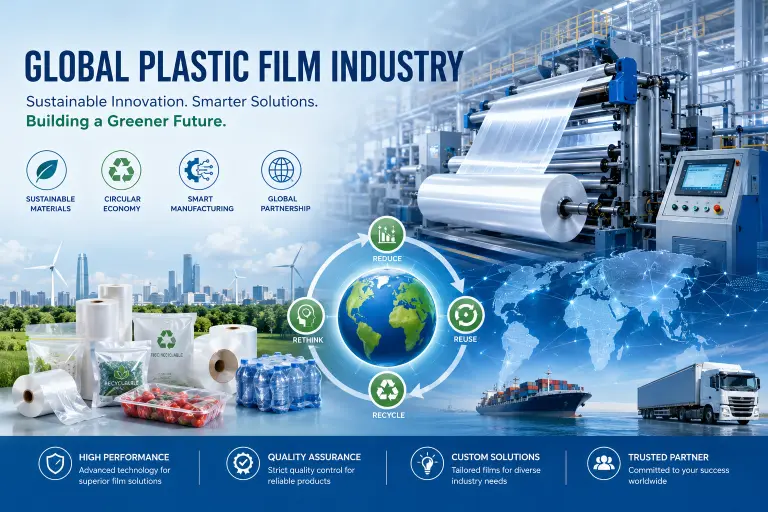
Currently, two core regulatory policies lead the ongoing industrial iteration. First, the EU Packaging and Packaging Waste Regulation (PPWR) takes full effect on August 12, 2026 across all member states without any transitional buffer period European Commission Official Release. Second, China’s updated Environmental Code raises local environmental compliance standards. Together, these two policies rewrite global packaging competition rules and raise rigid market access thresholds for export manufacturers.
Under such strict policy constraints, traditional low-end composite films face severe phase-out pressure. For example, common multi-layer structures like PET/PE and aluminum-plastic composite films belong to non-recyclable categories. Therefore, the EU market will completely ban these conventional packaging materials after official policy enforcement.In comparison, recyclable mono-material films, eco-friendly biodegradable films and high-end BOPP film dominate mainstream industry growth tracks.Furthermore, they guide global production capacity upgrading and market pattern differentiation.
Notably, the PPWR regulation sets clear and mandatory recycled content standards for all export packaging products. It clearly requires disposable packaging films to adopt 35% post-consumer recycled plastics by 2030, and the ratio will increase to 65% by 2040. Accordingly, recyclable design and recycled material application become basic compliance standards for all export enterprises. Thanks to its recyclable attributes and stable physical properties, BOPP film perfectly adapts to the latest policy standards and cross-border trade demands.